

.png)




Close
.svg)


The mortgage industry has become very good at being visible.
We post. We email. We text. We automate. We create reels, newsletters, market updates, buyer tips, referral partner campaigns, and follow-up sequences.
And yet, many professionals are still asking the same question: Why isn’t this creating more trust?
Because visibility and authority are not the same thing.
Visibility gets attention. Authority earns belief. And in today’s mortgage market, belief may be the most valuable currency we have.
Here is the part I believe women in mortgage need to hear: We are already uniquely equipped for this next era. Not because we need to become louder. Not because we need to work harder. Not because we need to post more often. But because many of us naturally lead through relationship, curiosity, communication, empathy, and holistic problem-solving.
Those are not secondary skills. They are trust-building skills.
And as technology continues to transform our industry, trust is becoming the ultimate differentiator.
For years, mortgage professionals have been told that success comes from staying visible.
Post more. Email more. Follow up more. Stay top of mind. Build your brand. Create content.
And while visibility absolutely matters, many of us have unknowingly fallen into a trap: We have mistaken activity for authority.
The reality is that the mortgage industry is producing more content than ever before. Every day, borrowers scroll through market updates, homebuying tips, rate commentary, credit advice, and mortgage myths.
Yet many still feel overwhelmed, confused, and uncertain about what to do next. Why? Because information alone does not create trust.
People don’t just need more content. They need clarity. They need interpretation. They need someone who can help them understand what all of that information actually means for their unique situation.
A market update is not thought leadership simply because it was posted online.A mortgage tip is not authority simply because it was shared consistently.
In a world overflowing with information, the professionals who stand out are not the ones saying more. They are the ones helping people understand more.
One of the greatest strengths women bring to this industry is something we often undervalue ourselves. We are naturally relational.
We tend to look beyond the transaction and see the human being inside it. We ask questions. We gather context. We consider the bigger picture.
Not just, “Can this borrower qualify?” But: “Is this the right solution for them?” “What are they trying to accomplish?” “What concerns haven’t they voiced yet?” “What does success actually look like for this family?”
Many women instinctively look at the mortgage process holistically. We see the numbers, but we also see the emotions. We see the loan, but we also see the life attached to it. We recognize that buying a home is rarely just a financial decision. It’s often tied to security, identity, family, dreams, fears, and long-term goals.
That ability to connect the dots is not soft. It’s strategic.
I call it relational intelligence.
Relational intelligence is the ability to understand not just the transaction, but the human being inside the transaction. And in today’s market, relational intelligence may be one of the most powerful competitive advantages a mortgage professional can possess.
The challenge is that many women have been conditioned to minimize these strengths.
We question whether our perspective is valuable enough. We hesitate to share our opinions. We soften our expertise. We wait until we feel completely ready before putting our voice out into the world.
Meanwhile, people who know less, care less, and have less experience confidently share their opinions every single day.
The future of mortgage leadership will not be built by women editing themselves out of their own authority. It will be built by women who finally recognize that their perspective is not a liability. It’s an asset.
The next generation of mortgage leaders will not simply be loan officers, branch managers, processors, marketers, or business owners. They will become what I call Trust Architects.
A Trust Architect intentionally designs how people experience her expertise.
She doesn’t just answer questions. She creates confidence. She doesn’t just explain loan options. She helps people understand what those options mean for their future.
She doesn’t just stay visible. She becomes memorable. She builds trust before someone ever needs a mortgage.
And that trust compounds over time.
The good news? This is not about becoming someone you’re not. It’s about becoming more of who you already are.
Visibility gets attention. Authority earns belief.
1. Voice: Trust What You See
Authority begins with perspective.
What do you believe that others in the industry overlook? What do you wish more borrowers understood? What misconceptions do you constantly find yourself correcting? What have years of experience taught you that a Google search never could?
Your voice is not your tone. Your voice is your viewpoint. And your viewpoint is one of the most valuable assets you have.
2. Visibility: Show Up With Purpose
Visibility still matters. But visibility without purpose creates noise. The goal is not to be everywhere. The goal is to be known for something meaningful.
The women who build authority are not necessarily posting the most. They are communicating consistently around a clear message and a clear mission.
3. Value: Translate, Don’t Just Inform
Borrowers already have access to information. What they need is interpretation. What changed? Why does it matter? What should they consider? What mistakes should they avoid? What opportunities are they missing?
The ability to simplify complexity is one of the highest-value skills in our industry.
People don’t just need more content. They need clarity. They need interpretation.
4. Verification: Make Invisible Value Visible
Many women assume that if they do exceptional work, people will naturally recognize it. Unfortunately, that isn’t always true.
Some of the most valuable work in mortgage happens behind the scenes. The calming conversation. The extra question. The proactive problem-solving. The issue prevented before it became a crisis. The education that helped a client make a confident decision. The trust-building work that never appears on a production report.
Authority grows when we learn how to make that invisible value visible.
5. Velocity: Amplify Your Wisdom
This is where AI enters the conversation. And it may be one of the greatest opportunities women in mortgage have ever been given.
Relational intelligence is the ability to understand not just the transaction, but the human being inside the transaction.
For years, many talented women struggled with visibility because there simply weren’t enough hours in the day.
Between clients, teams, families, operations, and leadership responsibilities, creating consistent content often felt impossible.
AI changes that.
Not because it replaces expertise. Because it amplifies it.
AI can help us organize ideas faster. Expand half-formed thoughts into complete articles. Repurpose a podcast into social content. Turn a presentation into educational emails. Transform client questions into meaningful thought leadership. Create consistency without requiring us to start from scratch every time.
But perhaps most importantly, AI allows women to scale their voice without losing their authenticity.
For years, building authority required enormous amounts of time. Today, AI allows us to spend less time staring at a blank page and more time sharing the wisdom we’ve already earned.
Used properly, AI doesn’t replace human connection. It creates more opportunities for it. It doesn’t replace relational intelligence. It helps us scale relational intelligence. It doesn’t replace authority. It amplifies authority.
The women who will thrive in the next decade are not the women who allow AI to think for them. They are the women who use AI to help more people benefit from the insights, experience, perspective, and wisdom they already possess.
I learned this firsthand.
For years, I helped people one mortgage conversation at a time. And those conversations mattered. But eventually, I realized that if I wanted to create a greater impact, I needed to build more than a transaction-based business.
That realization led me to write a book, launch podcasts, create educational resources, build Financial Mastery Simplified, and embrace AI as a tool to organize and amplify ideas that were already living inside my head.
The goal was never simply to become more visible. The goal was to become more useful. More educational. More accessible. More trusted.
AI didn’t create my voice. It helped me share it more consistently.
And that’s a distinction I believe more professionals need to understand.
Technology will continue to evolve. Consumer expectations will continue to change. AI will continue to reshape how we communicate, market, educate, and serve.
But one thing will remain constant: People will always crave trust. They will always seek clarity. They will always want someone who can help them navigate uncertainty with confidence.
Women in mortgage are uniquely positioned to lead this next chapter. Not because we have all the answers. But because we ask better questions. Not because we are the loudest voices. But because we are often the most trusted. Not because technology is replacing human connection. But because technology is finally giving us the ability to scale it.
I realized that if I wanted to create a greater impact, I needed to build more than a transaction-based business.
So yes, use the tools. Use AI. Build the systems. Create the content.
But don’t confuse visibility with authority. The real opportunity is bigger than that.
The future belongs to the women who learn to amplify their voice, trust their perspective, and intentionally architect trust at scale.
Because the women who do won’t just participate in the next era of mortgage.
They’ll lead it.
The mortgage industry has become very good at being visible.
We post. We email. We text. We automate. We create reels, newsletters, market updates, buyer tips, referral partner campaigns, and follow-up sequences.
And yet, many professionals are still asking the same question: Why isn’t this creating more trust?
Because visibility and authority are not the same thing.
Visibility gets attention. Authority earns belief. And in today’s mortgage market, belief may be the most valuable currency we have.
Here is the part I believe women in mortgage need to hear: We are already uniquely equipped for this next era. Not because we need to become louder. Not because we need to work harder. Not because we need to post more often. But because many of us naturally lead through relationship, curiosity, communication, empathy, and holistic problem-solving.
Those are not secondary skills. They are trust-building skills.
And as technology continues to transform our industry, trust is becoming the ultimate differentiator.
For years, mortgage professionals have been told that success comes from staying visible.
Post more. Email more. Follow up more. Stay top of mind. Build your brand. Create content.
And while visibility absolutely matters, many of us have unknowingly fallen into a trap: We have mistaken activity for authority.
The reality is that the mortgage industry is producing more content than ever before. Every day, borrowers scroll through market updates, homebuying tips, rate commentary, credit advice, and mortgage myths.
Yet many still feel overwhelmed, confused, and uncertain about what to do next. Why? Because information alone does not create trust.
People don’t just need more content. They need clarity. They need interpretation. They need someone who can help them understand what all of that information actually means for their unique situation.
A market update is not thought leadership simply because it was posted online.A mortgage tip is not authority simply because it was shared consistently.
In a world overflowing with information, the professionals who stand out are not the ones saying more. They are the ones helping people understand more.
One of the greatest strengths women bring to this industry is something we often undervalue ourselves. We are naturally relational.
We tend to look beyond the transaction and see the human being inside it. We ask questions. We gather context. We consider the bigger picture.
Not just, “Can this borrower qualify?” But: “Is this the right solution for them?” “What are they trying to accomplish?” “What concerns haven’t they voiced yet?” “What does success actually look like for this family?”
Many women instinctively look at the mortgage process holistically. We see the numbers, but we also see the emotions. We see the loan, but we also see the life attached to it. We recognize that buying a home is rarely just a financial decision. It’s often tied to security, identity, family, dreams, fears, and long-term goals.
That ability to connect the dots is not soft. It’s strategic.
I call it relational intelligence.
Relational intelligence is the ability to understand not just the transaction, but the human being inside the transaction. And in today’s market, relational intelligence may be one of the most powerful competitive advantages a mortgage professional can possess.
The challenge is that many women have been conditioned to minimize these strengths.
We question whether our perspective is valuable enough. We hesitate to share our opinions. We soften our expertise. We wait until we feel completely ready before putting our voice out into the world.
Meanwhile, people who know less, care less, and have less experience confidently share their opinions every single day.
The future of mortgage leadership will not be built by women editing themselves out of their own authority. It will be built by women who finally recognize that their perspective is not a liability. It’s an asset.
The next generation of mortgage leaders will not simply be loan officers, branch managers, processors, marketers, or business owners. They will become what I call Trust Architects.
A Trust Architect intentionally designs how people experience her expertise.
She doesn’t just answer questions. She creates confidence. She doesn’t just explain loan options. She helps people understand what those options mean for their future.
She doesn’t just stay visible. She becomes memorable. She builds trust before someone ever needs a mortgage.
And that trust compounds over time.
The good news? This is not about becoming someone you’re not. It’s about becoming more of who you already are.
Visibility gets attention. Authority earns belief.
1. Voice: Trust What You See
Authority begins with perspective.
What do you believe that others in the industry overlook? What do you wish more borrowers understood? What misconceptions do you constantly find yourself correcting? What have years of experience taught you that a Google search never could?
Your voice is not your tone. Your voice is your viewpoint. And your viewpoint is one of the most valuable assets you have.
2. Visibility: Show Up With Purpose
Visibility still matters. But visibility without purpose creates noise. The goal is not to be everywhere. The goal is to be known for something meaningful.
The women who build authority are not necessarily posting the most. They are communicating consistently around a clear message and a clear mission.
3. Value: Translate, Don’t Just Inform
Borrowers already have access to information. What they need is interpretation. What changed? Why does it matter? What should they consider? What mistakes should they avoid? What opportunities are they missing?
The ability to simplify complexity is one of the highest-value skills in our industry.
People don’t just need more content. They need clarity. They need interpretation.
4. Verification: Make Invisible Value Visible
Many women assume that if they do exceptional work, people will naturally recognize it. Unfortunately, that isn’t always true.
Some of the most valuable work in mortgage happens behind the scenes. The calming conversation. The extra question. The proactive problem-solving. The issue prevented before it became a crisis. The education that helped a client make a confident decision. The trust-building work that never appears on a production report.
Authority grows when we learn how to make that invisible value visible.
5. Velocity: Amplify Your Wisdom
This is where AI enters the conversation. And it may be one of the greatest opportunities women in mortgage have ever been given.
Relational intelligence is the ability to understand not just the transaction, but the human being inside the transaction.
For years, many talented women struggled with visibility because there simply weren’t enough hours in the day.
Between clients, teams, families, operations, and leadership responsibilities, creating consistent content often felt impossible.
AI changes that.
Not because it replaces expertise. Because it amplifies it.
AI can help us organize ideas faster. Expand half-formed thoughts into complete articles. Repurpose a podcast into social content. Turn a presentation into educational emails. Transform client questions into meaningful thought leadership. Create consistency without requiring us to start from scratch every time.
But perhaps most importantly, AI allows women to scale their voice without losing their authenticity.
For years, building authority required enormous amounts of time. Today, AI allows us to spend less time staring at a blank page and more time sharing the wisdom we’ve already earned.
Used properly, AI doesn’t replace human connection. It creates more opportunities for it. It doesn’t replace relational intelligence. It helps us scale relational intelligence. It doesn’t replace authority. It amplifies authority.
The women who will thrive in the next decade are not the women who allow AI to think for them. They are the women who use AI to help more people benefit from the insights, experience, perspective, and wisdom they already possess.
I learned this firsthand.
For years, I helped people one mortgage conversation at a time. And those conversations mattered. But eventually, I realized that if I wanted to create a greater impact, I needed to build more than a transaction-based business.
That realization led me to write a book, launch podcasts, create educational resources, build Financial Mastery Simplified, and embrace AI as a tool to organize and amplify ideas that were already living inside my head.
The goal was never simply to become more visible. The goal was to become more useful. More educational. More accessible. More trusted.
AI didn’t create my voice. It helped me share it more consistently.
And that’s a distinction I believe more professionals need to understand.
Technology will continue to evolve. Consumer expectations will continue to change. AI will continue to reshape how we communicate, market, educate, and serve.
But one thing will remain constant: People will always crave trust. They will always seek clarity. They will always want someone who can help them navigate uncertainty with confidence.
Women in mortgage are uniquely positioned to lead this next chapter. Not because we have all the answers. But because we ask better questions. Not because we are the loudest voices. But because we are often the most trusted. Not because technology is replacing human connection. But because technology is finally giving us the ability to scale it.
I realized that if I wanted to create a greater impact, I needed to build more than a transaction-based business.
So yes, use the tools. Use AI. Build the systems. Create the content.
But don’t confuse visibility with authority. The real opportunity is bigger than that.
The future belongs to the women who learn to amplify their voice, trust their perspective, and intentionally architect trust at scale.
Because the women who do won’t just participate in the next era of mortgage.
They’ll lead it.
The mortgage industry has become very good at being visible.
We post. We email. We text. We automate. We create reels, newsletters, market updates, buyer tips, referral partner campaigns, and follow-up sequences.
And yet, many professionals are still asking the same question: Why isn’t this creating more trust?
Because visibility and authority are not the same thing.
Visibility gets attention. Authority earns belief. And in today’s mortgage market, belief may be the most valuable currency we have.
Here is the part I believe women in mortgage need to hear: We are already uniquely equipped for this next era. Not because we need to become louder. Not because we need to work harder. Not because we need to post more often. But because many of us naturally lead through relationship, curiosity, communication, empathy, and holistic problem-solving.
Those are not secondary skills. They are trust-building skills.
And as technology continues to transform our industry, trust is becoming the ultimate differentiator.
For years, mortgage professionals have been told that success comes from staying visible.
Post more. Email more. Follow up more. Stay top of mind. Build your brand. Create content.
And while visibility absolutely matters, many of us have unknowingly fallen into a trap: We have mistaken activity for authority.
The reality is that the mortgage industry is producing more content than ever before. Every day, borrowers scroll through market updates, homebuying tips, rate commentary, credit advice, and mortgage myths.
Yet many still feel overwhelmed, confused, and uncertain about what to do next. Why? Because information alone does not create trust.
People don’t just need more content. They need clarity. They need interpretation. They need someone who can help them understand what all of that information actually means for their unique situation.
A market update is not thought leadership simply because it was posted online.A mortgage tip is not authority simply because it was shared consistently.
In a world overflowing with information, the professionals who stand out are not the ones saying more. They are the ones helping people understand more.
One of the greatest strengths women bring to this industry is something we often undervalue ourselves. We are naturally relational.
We tend to look beyond the transaction and see the human being inside it. We ask questions. We gather context. We consider the bigger picture.
Not just, “Can this borrower qualify?” But: “Is this the right solution for them?” “What are they trying to accomplish?” “What concerns haven’t they voiced yet?” “What does success actually look like for this family?”
Many women instinctively look at the mortgage process holistically. We see the numbers, but we also see the emotions. We see the loan, but we also see the life attached to it. We recognize that buying a home is rarely just a financial decision. It’s often tied to security, identity, family, dreams, fears, and long-term goals.
That ability to connect the dots is not soft. It’s strategic.
I call it relational intelligence.
Relational intelligence is the ability to understand not just the transaction, but the human being inside the transaction. And in today’s market, relational intelligence may be one of the most powerful competitive advantages a mortgage professional can possess.
The challenge is that many women have been conditioned to minimize these strengths.
We question whether our perspective is valuable enough. We hesitate to share our opinions. We soften our expertise. We wait until we feel completely ready before putting our voice out into the world.
Meanwhile, people who know less, care less, and have less experience confidently share their opinions every single day.
The future of mortgage leadership will not be built by women editing themselves out of their own authority. It will be built by women who finally recognize that their perspective is not a liability. It’s an asset.
The next generation of mortgage leaders will not simply be loan officers, branch managers, processors, marketers, or business owners. They will become what I call Trust Architects.
A Trust Architect intentionally designs how people experience her expertise.
She doesn’t just answer questions. She creates confidence. She doesn’t just explain loan options. She helps people understand what those options mean for their future.
She doesn’t just stay visible. She becomes memorable. She builds trust before someone ever needs a mortgage.
And that trust compounds over time.
The good news? This is not about becoming someone you’re not. It’s about becoming more of who you already are.
Visibility gets attention. Authority earns belief.
1. Voice: Trust What You See
Authority begins with perspective.
What do you believe that others in the industry overlook? What do you wish more borrowers understood? What misconceptions do you constantly find yourself correcting? What have years of experience taught you that a Google search never could?
Your voice is not your tone. Your voice is your viewpoint. And your viewpoint is one of the most valuable assets you have.
2. Visibility: Show Up With Purpose
Visibility still matters. But visibility without purpose creates noise. The goal is not to be everywhere. The goal is to be known for something meaningful.
The women who build authority are not necessarily posting the most. They are communicating consistently around a clear message and a clear mission.
3. Value: Translate, Don’t Just Inform
Borrowers already have access to information. What they need is interpretation. What changed? Why does it matter? What should they consider? What mistakes should they avoid? What opportunities are they missing?
The ability to simplify complexity is one of the highest-value skills in our industry.
People don’t just need more content. They need clarity. They need interpretation.
4. Verification: Make Invisible Value Visible
Many women assume that if they do exceptional work, people will naturally recognize it. Unfortunately, that isn’t always true.
Some of the most valuable work in mortgage happens behind the scenes. The calming conversation. The extra question. The proactive problem-solving. The issue prevented before it became a crisis. The education that helped a client make a confident decision. The trust-building work that never appears on a production report.
Authority grows when we learn how to make that invisible value visible.
5. Velocity: Amplify Your Wisdom
This is where AI enters the conversation. And it may be one of the greatest opportunities women in mortgage have ever been given.
Relational intelligence is the ability to understand not just the transaction, but the human being inside the transaction.
For years, many talented women struggled with visibility because there simply weren’t enough hours in the day.
Between clients, teams, families, operations, and leadership responsibilities, creating consistent content often felt impossible.
AI changes that.
Not because it replaces expertise. Because it amplifies it.
AI can help us organize ideas faster. Expand half-formed thoughts into complete articles. Repurpose a podcast into social content. Turn a presentation into educational emails. Transform client questions into meaningful thought leadership. Create consistency without requiring us to start from scratch every time.
But perhaps most importantly, AI allows women to scale their voice without losing their authenticity.
For years, building authority required enormous amounts of time. Today, AI allows us to spend less time staring at a blank page and more time sharing the wisdom we’ve already earned.
Used properly, AI doesn’t replace human connection. It creates more opportunities for it. It doesn’t replace relational intelligence. It helps us scale relational intelligence. It doesn’t replace authority. It amplifies authority.
The women who will thrive in the next decade are not the women who allow AI to think for them. They are the women who use AI to help more people benefit from the insights, experience, perspective, and wisdom they already possess.
I learned this firsthand.
For years, I helped people one mortgage conversation at a time. And those conversations mattered. But eventually, I realized that if I wanted to create a greater impact, I needed to build more than a transaction-based business.
That realization led me to write a book, launch podcasts, create educational resources, build Financial Mastery Simplified, and embrace AI as a tool to organize and amplify ideas that were already living inside my head.
The goal was never simply to become more visible. The goal was to become more useful. More educational. More accessible. More trusted.
AI didn’t create my voice. It helped me share it more consistently.
And that’s a distinction I believe more professionals need to understand.
Technology will continue to evolve. Consumer expectations will continue to change. AI will continue to reshape how we communicate, market, educate, and serve.
But one thing will remain constant: People will always crave trust. They will always seek clarity. They will always want someone who can help them navigate uncertainty with confidence.
Women in mortgage are uniquely positioned to lead this next chapter. Not because we have all the answers. But because we ask better questions. Not because we are the loudest voices. But because we are often the most trusted. Not because technology is replacing human connection. But because technology is finally giving us the ability to scale it.
I realized that if I wanted to create a greater impact, I needed to build more than a transaction-based business.
So yes, use the tools. Use AI. Build the systems. Create the content.
But don’t confuse visibility with authority. The real opportunity is bigger than that.
The future belongs to the women who learn to amplify their voice, trust their perspective, and intentionally architect trust at scale.
Because the women who do won’t just participate in the next era of mortgage.
They’ll lead it.
The mortgage industry has become very good at being visible.
We post. We email. We text. We automate. We create reels, newsletters, market updates, buyer tips, referral partner campaigns, and follow-up sequences.
And yet, many professionals are still asking the same question: Why isn’t this creating more trust?
Because visibility and authority are not the same thing.
Visibility gets attention. Authority earns belief. And in today’s mortgage market, belief may be the most valuable currency we have.
Here is the part I believe women in mortgage need to hear: We are already uniquely equipped for this next era. Not because we need to become louder. Not because we need to work harder. Not because we need to post more often. But because many of us naturally lead through relationship, curiosity, communication, empathy, and holistic problem-solving.
Those are not secondary skills. They are trust-building skills.
And as technology continues to transform our industry, trust is becoming the ultimate differentiator.
For years, mortgage professionals have been told that success comes from staying visible.
Post more. Email more. Follow up more. Stay top of mind. Build your brand. Create content.
And while visibility absolutely matters, many of us have unknowingly fallen into a trap: We have mistaken activity for authority.
The reality is that the mortgage industry is producing more content than ever before. Every day, borrowers scroll through market updates, homebuying tips, rate commentary, credit advice, and mortgage myths.
Yet many still feel overwhelmed, confused, and uncertain about what to do next. Why? Because information alone does not create trust.
People don’t just need more content. They need clarity. They need interpretation. They need someone who can help them understand what all of that information actually means for their unique situation.
A market update is not thought leadership simply because it was posted online.A mortgage tip is not authority simply because it was shared consistently.
In a world overflowing with information, the professionals who stand out are not the ones saying more. They are the ones helping people understand more.
One of the greatest strengths women bring to this industry is something we often undervalue ourselves. We are naturally relational.
We tend to look beyond the transaction and see the human being inside it. We ask questions. We gather context. We consider the bigger picture.
Not just, “Can this borrower qualify?” But: “Is this the right solution for them?” “What are they trying to accomplish?” “What concerns haven’t they voiced yet?” “What does success actually look like for this family?”
Many women instinctively look at the mortgage process holistically. We see the numbers, but we also see the emotions. We see the loan, but we also see the life attached to it. We recognize that buying a home is rarely just a financial decision. It’s often tied to security, identity, family, dreams, fears, and long-term goals.
That ability to connect the dots is not soft. It’s strategic.
I call it relational intelligence.
Relational intelligence is the ability to understand not just the transaction, but the human being inside the transaction. And in today’s market, relational intelligence may be one of the most powerful competitive advantages a mortgage professional can possess.
The challenge is that many women have been conditioned to minimize these strengths.
We question whether our perspective is valuable enough. We hesitate to share our opinions. We soften our expertise. We wait until we feel completely ready before putting our voice out into the world.
Meanwhile, people who know less, care less, and have less experience confidently share their opinions every single day.
The future of mortgage leadership will not be built by women editing themselves out of their own authority. It will be built by women who finally recognize that their perspective is not a liability. It’s an asset.
The next generation of mortgage leaders will not simply be loan officers, branch managers, processors, marketers, or business owners. They will become what I call Trust Architects.
A Trust Architect intentionally designs how people experience her expertise.
She doesn’t just answer questions. She creates confidence. She doesn’t just explain loan options. She helps people understand what those options mean for their future.
She doesn’t just stay visible. She becomes memorable. She builds trust before someone ever needs a mortgage.
And that trust compounds over time.
The good news? This is not about becoming someone you’re not. It’s about becoming more of who you already are.
Visibility gets attention. Authority earns belief.
1. Voice: Trust What You See
Authority begins with perspective.
What do you believe that others in the industry overlook? What do you wish more borrowers understood? What misconceptions do you constantly find yourself correcting? What have years of experience taught you that a Google search never could?
Your voice is not your tone. Your voice is your viewpoint. And your viewpoint is one of the most valuable assets you have.
2. Visibility: Show Up With Purpose
Visibility still matters. But visibility without purpose creates noise. The goal is not to be everywhere. The goal is to be known for something meaningful.
The women who build authority are not necessarily posting the most. They are communicating consistently around a clear message and a clear mission.
3. Value: Translate, Don’t Just Inform
Borrowers already have access to information. What they need is interpretation. What changed? Why does it matter? What should they consider? What mistakes should they avoid? What opportunities are they missing?
The ability to simplify complexity is one of the highest-value skills in our industry.
People don’t just need more content. They need clarity. They need interpretation.
4. Verification: Make Invisible Value Visible
Many women assume that if they do exceptional work, people will naturally recognize it. Unfortunately, that isn’t always true.
Some of the most valuable work in mortgage happens behind the scenes. The calming conversation. The extra question. The proactive problem-solving. The issue prevented before it became a crisis. The education that helped a client make a confident decision. The trust-building work that never appears on a production report.
Authority grows when we learn how to make that invisible value visible.
5. Velocity: Amplify Your Wisdom
This is where AI enters the conversation. And it may be one of the greatest opportunities women in mortgage have ever been given.
Relational intelligence is the ability to understand not just the transaction, but the human being inside the transaction.
For years, many talented women struggled with visibility because there simply weren’t enough hours in the day.
Between clients, teams, families, operations, and leadership responsibilities, creating consistent content often felt impossible.
AI changes that.
Not because it replaces expertise. Because it amplifies it.
AI can help us organize ideas faster. Expand half-formed thoughts into complete articles. Repurpose a podcast into social content. Turn a presentation into educational emails. Transform client questions into meaningful thought leadership. Create consistency without requiring us to start from scratch every time.
But perhaps most importantly, AI allows women to scale their voice without losing their authenticity.
For years, building authority required enormous amounts of time. Today, AI allows us to spend less time staring at a blank page and more time sharing the wisdom we’ve already earned.
Used properly, AI doesn’t replace human connection. It creates more opportunities for it. It doesn’t replace relational intelligence. It helps us scale relational intelligence. It doesn’t replace authority. It amplifies authority.
The women who will thrive in the next decade are not the women who allow AI to think for them. They are the women who use AI to help more people benefit from the insights, experience, perspective, and wisdom they already possess.
I learned this firsthand.
For years, I helped people one mortgage conversation at a time. And those conversations mattered. But eventually, I realized that if I wanted to create a greater impact, I needed to build more than a transaction-based business.
That realization led me to write a book, launch podcasts, create educational resources, build Financial Mastery Simplified, and embrace AI as a tool to organize and amplify ideas that were already living inside my head.
The goal was never simply to become more visible. The goal was to become more useful. More educational. More accessible. More trusted.
AI didn’t create my voice. It helped me share it more consistently.
And that’s a distinction I believe more professionals need to understand.
Technology will continue to evolve. Consumer expectations will continue to change. AI will continue to reshape how we communicate, market, educate, and serve.
But one thing will remain constant: People will always crave trust. They will always seek clarity. They will always want someone who can help them navigate uncertainty with confidence.
Women in mortgage are uniquely positioned to lead this next chapter. Not because we have all the answers. But because we ask better questions. Not because we are the loudest voices. But because we are often the most trusted. Not because technology is replacing human connection. But because technology is finally giving us the ability to scale it.
I realized that if I wanted to create a greater impact, I needed to build more than a transaction-based business.
So yes, use the tools. Use AI. Build the systems. Create the content.
But don’t confuse visibility with authority. The real opportunity is bigger than that.
The future belongs to the women who learn to amplify their voice, trust their perspective, and intentionally architect trust at scale.
Because the women who do won’t just participate in the next era of mortgage.
They’ll lead it.

MaxClass is a woman-owned company, and we're offering MWLC members 65% off your continuing education when you use our code WOMENWIN.
MaxClass is a woman-owned company, and we're offering MWLC members 65% off your continuing education. Become a member for our unique code.


Learning is a constant ever-evolving necessity in the industry


Single women are now buying more homes than single men

The new rules of mortgage brand awareness


How to Build Influence, Drive Performance and Protect Your Time

The unexpected turns that led Mae Mackey to the industry

Why humanity is the most valuable currency in mortgage lending

Three women leaders on why curiosity, courage, and raising your hand matter more than checking every box

How resilience, adaptability, and voice powered Elizabeth Mix’s rise in mortgage banking
.png)
Why the long way around led to clarity, growth, and a more intentional mortgage career

Strong brands don’t just differentiate — they mentor, inspire, and transform the future of mortgage

The industry keeps repeating old mistakes. Here’s how lenders can pivot, prepare, and protect profitability

A surprisingly powerful break from the chaos of grown-up life.

From Charmed to the mortgage industry

A letter from the editor
MaxClass is a woman-owned company, and we're offering MWLC members 65% off your continuing education when you use our code WOMENWIN.
MaxClass is a woman-owned company, and we're offering MWLC members 65% off your continuing education. Become a member for our unique code.
.png)


Homeownership has long represented more than a set of keys.
.png)
Sometimes, managing it all starts with admitting just how much we’re carrying. This conversation brings women together to talk honestly about the realities of balancing careers, responsibilities, and the people who depend on us.
Learning is a constant ever-evolving necessity in the industry

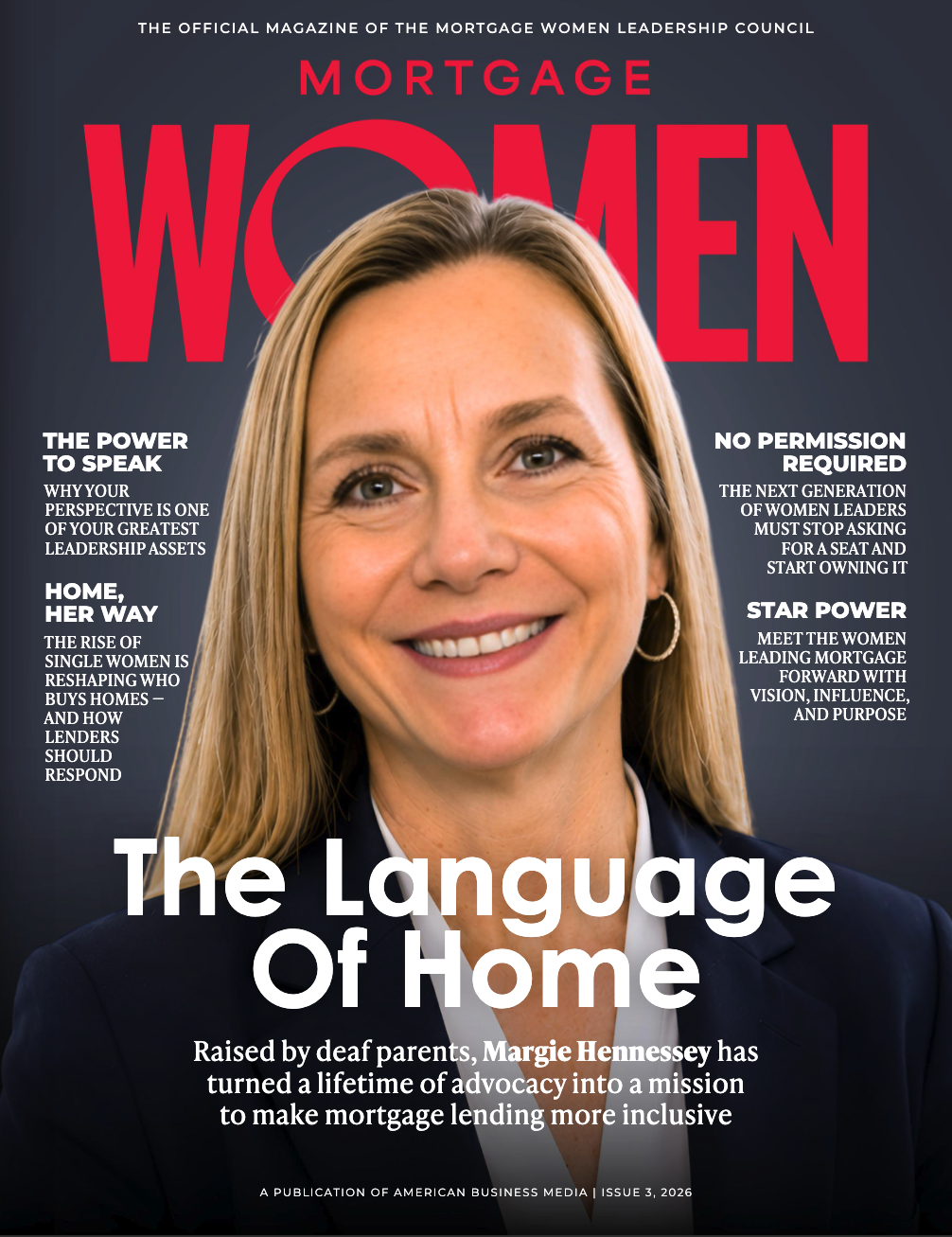
Margie Hennessey strives to make homeownership more accessible to the deaf community through direct communication via ASL
How women can speak up and stand out in meetings



.jpg)


.png)
.png)












.png)











.png)












.png)



Lorem ipsum dolor sit amet, consectetur adipiscing elit. Suspendisse varius enim in eros elementum tristique. Duis cursus, mi quis viverra ornare, eros dolor interdum nulla, ut commodo diam libero vitae erat. Aenean faucibus nibh et justo cursus id rutrum lorem imperdiet. Nunc ut sem vitae risus tristique posuere.
Lorem ipsum dolor sit amet, consectetur adipiscing elit. Suspendisse varius enim in eros elementum tristique. Duis cursus, mi quis viverra ornare, eros dolor interdum nulla, ut commodo diam libero vitae erat. Aenean faucibus nibh et justo cursus id rutrum lorem imperdiet. Nunc ut sem vitae risus tristique posuere.