
.png)




Close
.svg)


I joined the mortgage industry 25 years ago, determined to become a top producer. Although this goal was the same as pretty much everyone else’s in the mortgage industry, I knew success lay in finding my own unique path to getting there.
Every day since then, I’ve lived by my own professional mantra to “be more useful.” More useful than customers expected, more useful than my boss and colleagues knew was possible, and more useful than my competition could ever be.
What began as a little self-motivational speech became the foundation of my professional brand. Strong brands, be they for a company or an individual, are based on a key priority or value. “Being more useful” became mine. In brand speak, it’s my positioning as a specialist in Non-QM as well as my competitive differentiator. Most important, it’s my litmus test for the quality of my engagements and work.
I think the reason why I’ve been successful building my professional brand boils down to one simple thing. I picked a brand value true to who I am. Being more useful isn’t just something that popped into my head. I didn’t wake up one morning thinking, “I know; I’ll build my reputation on being more useful.” Being more useful is innate. It comes naturally to me. I became known for it before I became aware of its power as my brand’s North Star.
My title as a Senior Vice President, Client Development makes me sound like a salesperson. While business development is always the objective and measure of my work, my background in mortgage processing and operations makes me a ‘fixer.’ The one clients turn to when they need flexibility on the underwriting, or their customer is a start-up, or the thousands of other tacks under the tires that come up during a mortgage engagement. Because my roots are in operations, not sales, I know exactly when and where the process can be used to solve problems, not create or add to them. That’s the true source of my ability to be more useful.
While being more useful came naturally to me, getting my professional brand out into the marketplace did not. I was very comfortable behind the scenes, leading the way in operations. But I really had to work on building my brand externally. Once I knew my brand narrative, I came to rely on these four core practices to make sure all my clients, industry partners, and colleagues knew it, too:
Reinforce your core brand value and differentiator in all your communications including your bio, blogs, pitches, even your email signature. My LinkedIn profile says I’m a top performer in sales (I’ve never wavered from my original goal) and then immediately backs it up not with how many clients and accounts I manage or how many sales roles I’ve had but with my operational expertise and processing experience.
“I think the reason why I’ve been successful building my professional brand boils down to one simple thing. I picked a brand value true to who I am.”
Be an educator. I am constantly sharing my role as problem solver and ‘Chief Usefulness Officer’ when I sit on committees, join panels, speak at conferences, and write content (like this article). And don’t forget your internal audience. I am constantly teaching my team how usefulness and productivity are really the same thing.
Create referral triggers that give others a reason to recommend you on your brand strengths. In my case, I’m the one to call when the customer needs a problem solver or is grappling with a peculiar need or situation.
Show results and share wins in a way that reinforces what you want your brand to stand for. Everyone loves a good war story and I often begin engagements with a real example of how my team and I delivered above and beyond by putting our collective usefulness to work on a challenging situation.
Early on, I realized that clients do not just choose a logo; they choose a company whose priorities and values align with their own. But while marketing or sales may convey those priorities and values, it was up to me to deliver on them once I was in the room. If I didn’t, not only would the company’s reputation suffer, so would mine. Conversely, I also knew upholding my company’s brand values was my path to professional growth. It created an unspoken and unbreakable trust with clients, helped drive more and more referrals, and continues to set me apart in a crowded industry while protecting my relationships from ever-lurking competitors.
My narrative about being more useful is how I connect the dots between my company’s brand values of innovation and service and bring them to life using real examples such as out-of-the-box product solutions and flexibility. Weaving my own usefulness due to my operational expertise into this narrative during conference presentations, sales PowerPoints, and even one-on-one email correspondence with customers creates a powerful alignment between what I stand for and what my company stands for.
A brand is a promise. I speak from the heart as well as experience when I say my own core value of being more useful helps me deliver on my company’s brand promise every single day. And that, my friends, is how I became a top producer.
• • •

President, Incenter Diligence Solutions
When you’re growing a mortgage firm, experts will tell you to spend more time on your business than in the business. Focusing mainly on strategic and business development initiatives, rather than getting wrapped up in day-to-day processes, will push your company forward over time. But it’s still important not to separate yourself from your people and daily operations. Staying in the center of activity without micromanaging keeps leaders informed, up-to-date, and approachable, and makes them better mentors, coaches, and advisors.
Over my 30-year career in the mortgage industry, without necessarily realizing it, I’ve built a personal brand based on these qualities. Now they set the tone for my dream job — leading a boutique mortgage diligence business that has grown based on its expertise, personalization, and collaborative client relationships. If clients have questions about our recommendations, they can consult with anyone on our front lines. That includes me, and I embrace their emails and calls.
This natural “brand development”, or really just being who I am, started when I was an entry-level employee. With mentors’ help, I soaked up information on every possible function, including processing, underwriting, compliance, and disclosures. Eventually, I attained senior-level operations roles for major mortgage firms. There, as I do now, I committed to understanding every process layer or nuance that could be important to our company or clients. We are only as good as our level of knowledge, and I take that very seriously.
Give and take has always been part of my personal brand equation, too. It’s not just how I am at work; it’s the way I “do life.” When my two daughters were growing up, my husband and I never used the phrase “because I said so,” even when it was tempting! We knew that consistency and setting limits were critical, but we worried that an authoritarian style would backfire. Instead, without negotiating or waffling, we spent time explaining the why behind the rules in ways that our daughters could appreciate. We believe that helped us forge our close relationships with each child.
In my current role, I combine that innate commitment to two-way dialogue and knowledge building. On the knowledge side, I regularly jump in and review loans or portfolios myself. I handle client projects from beginning to end, and monitor what happens afterwards. Not only does this help me advise clients with confidence; it also empowers me to grow my team’s skills. I can’t support them unless I’m fully immersed in the daily production flow. Our conversations are multi-directional and mutually respectful as we share obstacles, problem-solving ideas, and successes.
Many times, our team cannot clear a loan based on the documentation from a client or a seller, and we are forced to impose conditions on it. In those situations, we have a rule that we will speak internally before notifying our client. Often, because I’m involved, I can see both sides of an issue and guide our team to look at it a little differently. If we continue to agree that a particular condition is justified, I can help our client understand how our firm came to that conclusion. If they disagree and prefer to make exceptions, they still know that our desire to protect their interests always informs our work. And they understand that, although we will give our very best effort to every engagement, we will fully respect their final decisions.
“It’s still important not to separate yourself from your people and daily operations.” > Pamela Hamrick
Although this way of working is part of my personal DNA and our business’s persona, our company’s success is about our team, not me. My job is to support and teach them, and provide them with a bright future. Hopefully, each of them will love what they do and feel that they are not only giving, but getting something back every day.
When I feel our team’s and clients’ satisfaction, working both on and in the business is a true pleasure.
• • •

CEO, Pivot Financial
When I first started working in this industry, I really didn’t focus on building a personal brand. As a matter of fact, my preference was to just do the work. I really wasn’t into the idea of being optic. I learned rather quickly that this is not how this industry works, if your goal is a long-term career and you want to move up and into executive level roles. This business is built primarily on relationships and the rest follows.
In my opinion, building a personal brand is often misunderstood as self-promotion. To me, it is something much more substantive. It is the reputation you build through the quality of your thoughts, the consistency of your work, the questions you ask, the ideas you bring forward, and your ability to do what you say you can do.
A strong personal brand is not created by being visible for the sake of visibility or posting content to get “clicks.” It is created when people begin to associate your name with a certain level of insight, preparation, creativity, and follow-through. It is built when someone knows that, if they bring you a difficult problem, you will not offer a “high-level” answer or repeat what everyone else is already saying. You will go deeper and offer a solution that can in fact be executed. Make no mistake; this level of content is harder and more time consuming than just posting for “clicks.”
That is what the foundation of my journey is built on.
My work has always been rooted in complex areas of housing finance, credit, capital markets, asset management, servicing, securitization, and structured finance. These are industries where broad ideas are important, but details matter just as much, if not more. A strategy can sound compelling in a meeting, but the real question is whether it can work in practice. Can it be structured correctly? Can it be executed? Does it account for risk? Does it align with the market, the borrower, the client, the investor, the regulatory environment, and the long-term objective?
This is where thought leadership becomes meaningful.
“[A personal brand] is the reputation you build through the quality of your thoughts, the consistency of your work, the questions you ask, the ideas you bring forward, and your ability to do what you say you can do.” > Jennifer McGuinness-Lubbert
Thought leadership is not simply having an opinion. It is having an informed perspective that adds something useful to the conversation. It requires research, pattern recognition, curiosity, and the willingness to question assumptions. It means reading beyond the headline, understanding the source material, and considering what a market shift, policy change, transaction structure, or new business strategy actually means in the real world.
In most cases, the valuable work happens before any public conversation ever begins. It is in the research. It is in reviewing the data, understanding the history, evaluating the mechanics behind a transaction, and looking closely at what is changing beneath the surface. It is in recognizing that two issues that appear unrelated may actually be connected. It is in identifying where the friction is, where the risk may emerge, or where the opportunity has not yet been fully understood.
That is the kind of value I work to bring. To communicate those insights in a way that helps people make better decisions.
Creativity is also an important part of that process. In financial services, creativity is often misunderstood. It is not about being “flashy” or trying to make something sound different. It is about being able to see another path when the obvious one is not working. It is asking whether a process can be improved, whether a product can be structured differently, whether a risk can be addressed in a more thoughtful way, or whether a market challenge can become an opportunity.
The best solutions are rarely created by ignoring complexity. They are created by understanding complexity well enough to simplify it for others.
That requires a balance between strategy and execution. It is not enough to identify an issue or offer an interesting perspective. The real work is being able to turn that perspective into something practical. That may mean a stronger transaction structure, a better risk framework, a more efficient process, a clearer market strategy, a new product concept, or a solution to a problem that has been unresolved for too long. All of this goes hand in hand, generally, with the organization that you represent and whether it’s emerging or established. That may or may not impact the delivery of your message and how the industry responds to it.
People remember whether you deliver; they also remember when you don’t.
They remember whether you were prepared. They remember whether your analysis held up. They remember whether you understood the details, anticipated the challenges, and followed through when it mattered. Over time, that becomes your reputation.
Organizations want to work with people who bring more than a title or network. They want people who can see around corners, ask the questions others are not asking, and turn complex information into a clear point of view. They want thought leaders who are willing to do the research, understand the details, challenge conventional thinking, and bring forward ideas that are both creative and executable.
The reason organizations want to work with people like me is not because we are the loudest voice in the room. It is because we bring perspective, credibility, and follow-through. We can help shape the conversation, create clarity where there is uncertainty, and turn ideas into real outcomes.
A personal brand can also help elevate the organization around it and vice versa. When people trust your insight, they pay attention to the platform you represent. If the platform you represent is well respected, this can also open doors for you. When they believe in your and/or your organization’s judgment and your ability to execute, that confidence extends beyond the individual relationship. Your reputation, and that of the company, can create opportunities, build credibility, and strengthen relationships. Leveraging this combination can help both stand out in a crowded market.
For me, personal branding is ultimately about trust. It is about being known for doing the work, knowing the details, thinking creatively. It is about being someone people call when the answer is not obvious, the stakes are high, or the path forward needs to be built—not simply found.
That is the kind of brand I continue to build and that is what our organization is built upon.


I joined the mortgage industry 25 years ago, determined to become a top producer. Although this goal was the same as pretty much everyone else’s in the mortgage industry, I knew success lay in finding my own unique path to getting there.
Every day since then, I’ve lived by my own professional mantra to “be more useful.” More useful than customers expected, more useful than my boss and colleagues knew was possible, and more useful than my competition could ever be.
What began as a little self-motivational speech became the foundation of my professional brand. Strong brands, be they for a company or an individual, are based on a key priority or value. “Being more useful” became mine. In brand speak, it’s my positioning as a specialist in Non-QM as well as my competitive differentiator. Most important, it’s my litmus test for the quality of my engagements and work.
I think the reason why I’ve been successful building my professional brand boils down to one simple thing. I picked a brand value true to who I am. Being more useful isn’t just something that popped into my head. I didn’t wake up one morning thinking, “I know; I’ll build my reputation on being more useful.” Being more useful is innate. It comes naturally to me. I became known for it before I became aware of its power as my brand’s North Star.
My title as a Senior Vice President, Client Development makes me sound like a salesperson. While business development is always the objective and measure of my work, my background in mortgage processing and operations makes me a ‘fixer.’ The one clients turn to when they need flexibility on the underwriting, or their customer is a start-up, or the thousands of other tacks under the tires that come up during a mortgage engagement. Because my roots are in operations, not sales, I know exactly when and where the process can be used to solve problems, not create or add to them. That’s the true source of my ability to be more useful.
While being more useful came naturally to me, getting my professional brand out into the marketplace did not. I was very comfortable behind the scenes, leading the way in operations. But I really had to work on building my brand externally. Once I knew my brand narrative, I came to rely on these four core practices to make sure all my clients, industry partners, and colleagues knew it, too:
Reinforce your core brand value and differentiator in all your communications including your bio, blogs, pitches, even your email signature. My LinkedIn profile says I’m a top performer in sales (I’ve never wavered from my original goal) and then immediately backs it up not with how many clients and accounts I manage or how many sales roles I’ve had but with my operational expertise and processing experience.
“I think the reason why I’ve been successful building my professional brand boils down to one simple thing. I picked a brand value true to who I am.”
Be an educator. I am constantly sharing my role as problem solver and ‘Chief Usefulness Officer’ when I sit on committees, join panels, speak at conferences, and write content (like this article). And don’t forget your internal audience. I am constantly teaching my team how usefulness and productivity are really the same thing.
Create referral triggers that give others a reason to recommend you on your brand strengths. In my case, I’m the one to call when the customer needs a problem solver or is grappling with a peculiar need or situation.
Show results and share wins in a way that reinforces what you want your brand to stand for. Everyone loves a good war story and I often begin engagements with a real example of how my team and I delivered above and beyond by putting our collective usefulness to work on a challenging situation.
Early on, I realized that clients do not just choose a logo; they choose a company whose priorities and values align with their own. But while marketing or sales may convey those priorities and values, it was up to me to deliver on them once I was in the room. If I didn’t, not only would the company’s reputation suffer, so would mine. Conversely, I also knew upholding my company’s brand values was my path to professional growth. It created an unspoken and unbreakable trust with clients, helped drive more and more referrals, and continues to set me apart in a crowded industry while protecting my relationships from ever-lurking competitors.
My narrative about being more useful is how I connect the dots between my company’s brand values of innovation and service and bring them to life using real examples such as out-of-the-box product solutions and flexibility. Weaving my own usefulness due to my operational expertise into this narrative during conference presentations, sales PowerPoints, and even one-on-one email correspondence with customers creates a powerful alignment between what I stand for and what my company stands for.
A brand is a promise. I speak from the heart as well as experience when I say my own core value of being more useful helps me deliver on my company’s brand promise every single day. And that, my friends, is how I became a top producer.
• • •
President, Incenter Diligence Solutions
When you’re growing a mortgage firm, experts will tell you to spend more time on your business than in the business. Focusing mainly on strategic and business development initiatives, rather than getting wrapped up in day-to-day processes, will push your company forward over time. But it’s still important not to separate yourself from your people and daily operations. Staying in the center of activity without micromanaging keeps leaders informed, up-to-date, and approachable, and makes them better mentors, coaches, and advisors.
Over my 30-year career in the mortgage industry, without necessarily realizing it, I’ve built a personal brand based on these qualities. Now they set the tone for my dream job — leading a boutique mortgage diligence business that has grown based on its expertise, personalization, and collaborative client relationships. If clients have questions about our recommendations, they can consult with anyone on our front lines. That includes me, and I embrace their emails and calls.
This natural “brand development”, or really just being who I am, started when I was an entry-level employee. With mentors’ help, I soaked up information on every possible function, including processing, underwriting, compliance, and disclosures. Eventually, I attained senior-level operations roles for major mortgage firms. There, as I do now, I committed to understanding every process layer or nuance that could be important to our company or clients. We are only as good as our level of knowledge, and I take that very seriously.
Give and take has always been part of my personal brand equation, too. It’s not just how I am at work; it’s the way I “do life.” When my two daughters were growing up, my husband and I never used the phrase “because I said so,” even when it was tempting! We knew that consistency and setting limits were critical, but we worried that an authoritarian style would backfire. Instead, without negotiating or waffling, we spent time explaining the why behind the rules in ways that our daughters could appreciate. We believe that helped us forge our close relationships with each child.
In my current role, I combine that innate commitment to two-way dialogue and knowledge building. On the knowledge side, I regularly jump in and review loans or portfolios myself. I handle client projects from beginning to end, and monitor what happens afterwards. Not only does this help me advise clients with confidence; it also empowers me to grow my team’s skills. I can’t support them unless I’m fully immersed in the daily production flow. Our conversations are multi-directional and mutually respectful as we share obstacles, problem-solving ideas, and successes.
Many times, our team cannot clear a loan based on the documentation from a client or a seller, and we are forced to impose conditions on it. In those situations, we have a rule that we will speak internally before notifying our client. Often, because I’m involved, I can see both sides of an issue and guide our team to look at it a little differently. If we continue to agree that a particular condition is justified, I can help our client understand how our firm came to that conclusion. If they disagree and prefer to make exceptions, they still know that our desire to protect their interests always informs our work. And they understand that, although we will give our very best effort to every engagement, we will fully respect their final decisions.
“It’s still important not to separate yourself from your people and daily operations.” > Pamela Hamrick
Although this way of working is part of my personal DNA and our business’s persona, our company’s success is about our team, not me. My job is to support and teach them, and provide them with a bright future. Hopefully, each of them will love what they do and feel that they are not only giving, but getting something back every day.
When I feel our team’s and clients’ satisfaction, working both on and in the business is a true pleasure.
• • •
CEO, Pivot Financial
When I first started working in this industry, I really didn’t focus on building a personal brand. As a matter of fact, my preference was to just do the work. I really wasn’t into the idea of being optic. I learned rather quickly that this is not how this industry works, if your goal is a long-term career and you want to move up and into executive level roles. This business is built primarily on relationships and the rest follows.
In my opinion, building a personal brand is often misunderstood as self-promotion. To me, it is something much more substantive. It is the reputation you build through the quality of your thoughts, the consistency of your work, the questions you ask, the ideas you bring forward, and your ability to do what you say you can do.
A strong personal brand is not created by being visible for the sake of visibility or posting content to get “clicks.” It is created when people begin to associate your name with a certain level of insight, preparation, creativity, and follow-through. It is built when someone knows that, if they bring you a difficult problem, you will not offer a “high-level” answer or repeat what everyone else is already saying. You will go deeper and offer a solution that can in fact be executed. Make no mistake; this level of content is harder and more time consuming than just posting for “clicks.”
That is what the foundation of my journey is built on.
My work has always been rooted in complex areas of housing finance, credit, capital markets, asset management, servicing, securitization, and structured finance. These are industries where broad ideas are important, but details matter just as much, if not more. A strategy can sound compelling in a meeting, but the real question is whether it can work in practice. Can it be structured correctly? Can it be executed? Does it account for risk? Does it align with the market, the borrower, the client, the investor, the regulatory environment, and the long-term objective?
This is where thought leadership becomes meaningful.
“[A personal brand] is the reputation you build through the quality of your thoughts, the consistency of your work, the questions you ask, the ideas you bring forward, and your ability to do what you say you can do.” > Jennifer McGuinness-Lubbert
Thought leadership is not simply having an opinion. It is having an informed perspective that adds something useful to the conversation. It requires research, pattern recognition, curiosity, and the willingness to question assumptions. It means reading beyond the headline, understanding the source material, and considering what a market shift, policy change, transaction structure, or new business strategy actually means in the real world.
In most cases, the valuable work happens before any public conversation ever begins. It is in the research. It is in reviewing the data, understanding the history, evaluating the mechanics behind a transaction, and looking closely at what is changing beneath the surface. It is in recognizing that two issues that appear unrelated may actually be connected. It is in identifying where the friction is, where the risk may emerge, or where the opportunity has not yet been fully understood.
That is the kind of value I work to bring. To communicate those insights in a way that helps people make better decisions.
Creativity is also an important part of that process. In financial services, creativity is often misunderstood. It is not about being “flashy” or trying to make something sound different. It is about being able to see another path when the obvious one is not working. It is asking whether a process can be improved, whether a product can be structured differently, whether a risk can be addressed in a more thoughtful way, or whether a market challenge can become an opportunity.
The best solutions are rarely created by ignoring complexity. They are created by understanding complexity well enough to simplify it for others.
That requires a balance between strategy and execution. It is not enough to identify an issue or offer an interesting perspective. The real work is being able to turn that perspective into something practical. That may mean a stronger transaction structure, a better risk framework, a more efficient process, a clearer market strategy, a new product concept, or a solution to a problem that has been unresolved for too long. All of this goes hand in hand, generally, with the organization that you represent and whether it’s emerging or established. That may or may not impact the delivery of your message and how the industry responds to it.
People remember whether you deliver; they also remember when you don’t.
They remember whether you were prepared. They remember whether your analysis held up. They remember whether you understood the details, anticipated the challenges, and followed through when it mattered. Over time, that becomes your reputation.
Organizations want to work with people who bring more than a title or network. They want people who can see around corners, ask the questions others are not asking, and turn complex information into a clear point of view. They want thought leaders who are willing to do the research, understand the details, challenge conventional thinking, and bring forward ideas that are both creative and executable.
The reason organizations want to work with people like me is not because we are the loudest voice in the room. It is because we bring perspective, credibility, and follow-through. We can help shape the conversation, create clarity where there is uncertainty, and turn ideas into real outcomes.
A personal brand can also help elevate the organization around it and vice versa. When people trust your insight, they pay attention to the platform you represent. If the platform you represent is well respected, this can also open doors for you. When they believe in your and/or your organization’s judgment and your ability to execute, that confidence extends beyond the individual relationship. Your reputation, and that of the company, can create opportunities, build credibility, and strengthen relationships. Leveraging this combination can help both stand out in a crowded market.
For me, personal branding is ultimately about trust. It is about being known for doing the work, knowing the details, thinking creatively. It is about being someone people call when the answer is not obvious, the stakes are high, or the path forward needs to be built—not simply found.
That is the kind of brand I continue to build and that is what our organization is built upon.
I joined the mortgage industry 25 years ago, determined to become a top producer. Although this goal was the same as pretty much everyone else’s in the mortgage industry, I knew success lay in finding my own unique path to getting there.
Every day since then, I’ve lived by my own professional mantra to “be more useful.” More useful than customers expected, more useful than my boss and colleagues knew was possible, and more useful than my competition could ever be.
What began as a little self-motivational speech became the foundation of my professional brand. Strong brands, be they for a company or an individual, are based on a key priority or value. “Being more useful” became mine. In brand speak, it’s my positioning as a specialist in Non-QM as well as my competitive differentiator. Most important, it’s my litmus test for the quality of my engagements and work.
I think the reason why I’ve been successful building my professional brand boils down to one simple thing. I picked a brand value true to who I am. Being more useful isn’t just something that popped into my head. I didn’t wake up one morning thinking, “I know; I’ll build my reputation on being more useful.” Being more useful is innate. It comes naturally to me. I became known for it before I became aware of its power as my brand’s North Star.
My title as a Senior Vice President, Client Development makes me sound like a salesperson. While business development is always the objective and measure of my work, my background in mortgage processing and operations makes me a ‘fixer.’ The one clients turn to when they need flexibility on the underwriting, or their customer is a start-up, or the thousands of other tacks under the tires that come up during a mortgage engagement. Because my roots are in operations, not sales, I know exactly when and where the process can be used to solve problems, not create or add to them. That’s the true source of my ability to be more useful.
While being more useful came naturally to me, getting my professional brand out into the marketplace did not. I was very comfortable behind the scenes, leading the way in operations. But I really had to work on building my brand externally. Once I knew my brand narrative, I came to rely on these four core practices to make sure all my clients, industry partners, and colleagues knew it, too:
Reinforce your core brand value and differentiator in all your communications including your bio, blogs, pitches, even your email signature. My LinkedIn profile says I’m a top performer in sales (I’ve never wavered from my original goal) and then immediately backs it up not with how many clients and accounts I manage or how many sales roles I’ve had but with my operational expertise and processing experience.
“I think the reason why I’ve been successful building my professional brand boils down to one simple thing. I picked a brand value true to who I am.”
Be an educator. I am constantly sharing my role as problem solver and ‘Chief Usefulness Officer’ when I sit on committees, join panels, speak at conferences, and write content (like this article). And don’t forget your internal audience. I am constantly teaching my team how usefulness and productivity are really the same thing.
Create referral triggers that give others a reason to recommend you on your brand strengths. In my case, I’m the one to call when the customer needs a problem solver or is grappling with a peculiar need or situation.
Show results and share wins in a way that reinforces what you want your brand to stand for. Everyone loves a good war story and I often begin engagements with a real example of how my team and I delivered above and beyond by putting our collective usefulness to work on a challenging situation.
Early on, I realized that clients do not just choose a logo; they choose a company whose priorities and values align with their own. But while marketing or sales may convey those priorities and values, it was up to me to deliver on them once I was in the room. If I didn’t, not only would the company’s reputation suffer, so would mine. Conversely, I also knew upholding my company’s brand values was my path to professional growth. It created an unspoken and unbreakable trust with clients, helped drive more and more referrals, and continues to set me apart in a crowded industry while protecting my relationships from ever-lurking competitors.
My narrative about being more useful is how I connect the dots between my company’s brand values of innovation and service and bring them to life using real examples such as out-of-the-box product solutions and flexibility. Weaving my own usefulness due to my operational expertise into this narrative during conference presentations, sales PowerPoints, and even one-on-one email correspondence with customers creates a powerful alignment between what I stand for and what my company stands for.
A brand is a promise. I speak from the heart as well as experience when I say my own core value of being more useful helps me deliver on my company’s brand promise every single day. And that, my friends, is how I became a top producer.
• • •
President, Incenter Diligence Solutions
When you’re growing a mortgage firm, experts will tell you to spend more time on your business than in the business. Focusing mainly on strategic and business development initiatives, rather than getting wrapped up in day-to-day processes, will push your company forward over time. But it’s still important not to separate yourself from your people and daily operations. Staying in the center of activity without micromanaging keeps leaders informed, up-to-date, and approachable, and makes them better mentors, coaches, and advisors.
Over my 30-year career in the mortgage industry, without necessarily realizing it, I’ve built a personal brand based on these qualities. Now they set the tone for my dream job — leading a boutique mortgage diligence business that has grown based on its expertise, personalization, and collaborative client relationships. If clients have questions about our recommendations, they can consult with anyone on our front lines. That includes me, and I embrace their emails and calls.
This natural “brand development”, or really just being who I am, started when I was an entry-level employee. With mentors’ help, I soaked up information on every possible function, including processing, underwriting, compliance, and disclosures. Eventually, I attained senior-level operations roles for major mortgage firms. There, as I do now, I committed to understanding every process layer or nuance that could be important to our company or clients. We are only as good as our level of knowledge, and I take that very seriously.
Give and take has always been part of my personal brand equation, too. It’s not just how I am at work; it’s the way I “do life.” When my two daughters were growing up, my husband and I never used the phrase “because I said so,” even when it was tempting! We knew that consistency and setting limits were critical, but we worried that an authoritarian style would backfire. Instead, without negotiating or waffling, we spent time explaining the why behind the rules in ways that our daughters could appreciate. We believe that helped us forge our close relationships with each child.
In my current role, I combine that innate commitment to two-way dialogue and knowledge building. On the knowledge side, I regularly jump in and review loans or portfolios myself. I handle client projects from beginning to end, and monitor what happens afterwards. Not only does this help me advise clients with confidence; it also empowers me to grow my team’s skills. I can’t support them unless I’m fully immersed in the daily production flow. Our conversations are multi-directional and mutually respectful as we share obstacles, problem-solving ideas, and successes.
Many times, our team cannot clear a loan based on the documentation from a client or a seller, and we are forced to impose conditions on it. In those situations, we have a rule that we will speak internally before notifying our client. Often, because I’m involved, I can see both sides of an issue and guide our team to look at it a little differently. If we continue to agree that a particular condition is justified, I can help our client understand how our firm came to that conclusion. If they disagree and prefer to make exceptions, they still know that our desire to protect their interests always informs our work. And they understand that, although we will give our very best effort to every engagement, we will fully respect their final decisions.
“It’s still important not to separate yourself from your people and daily operations.” > Pamela Hamrick
Although this way of working is part of my personal DNA and our business’s persona, our company’s success is about our team, not me. My job is to support and teach them, and provide them with a bright future. Hopefully, each of them will love what they do and feel that they are not only giving, but getting something back every day.
When I feel our team’s and clients’ satisfaction, working both on and in the business is a true pleasure.
• • •
CEO, Pivot Financial
When I first started working in this industry, I really didn’t focus on building a personal brand. As a matter of fact, my preference was to just do the work. I really wasn’t into the idea of being optic. I learned rather quickly that this is not how this industry works, if your goal is a long-term career and you want to move up and into executive level roles. This business is built primarily on relationships and the rest follows.
In my opinion, building a personal brand is often misunderstood as self-promotion. To me, it is something much more substantive. It is the reputation you build through the quality of your thoughts, the consistency of your work, the questions you ask, the ideas you bring forward, and your ability to do what you say you can do.
A strong personal brand is not created by being visible for the sake of visibility or posting content to get “clicks.” It is created when people begin to associate your name with a certain level of insight, preparation, creativity, and follow-through. It is built when someone knows that, if they bring you a difficult problem, you will not offer a “high-level” answer or repeat what everyone else is already saying. You will go deeper and offer a solution that can in fact be executed. Make no mistake; this level of content is harder and more time consuming than just posting for “clicks.”
That is what the foundation of my journey is built on.
My work has always been rooted in complex areas of housing finance, credit, capital markets, asset management, servicing, securitization, and structured finance. These are industries where broad ideas are important, but details matter just as much, if not more. A strategy can sound compelling in a meeting, but the real question is whether it can work in practice. Can it be structured correctly? Can it be executed? Does it account for risk? Does it align with the market, the borrower, the client, the investor, the regulatory environment, and the long-term objective?
This is where thought leadership becomes meaningful.
“[A personal brand] is the reputation you build through the quality of your thoughts, the consistency of your work, the questions you ask, the ideas you bring forward, and your ability to do what you say you can do.” > Jennifer McGuinness-Lubbert
Thought leadership is not simply having an opinion. It is having an informed perspective that adds something useful to the conversation. It requires research, pattern recognition, curiosity, and the willingness to question assumptions. It means reading beyond the headline, understanding the source material, and considering what a market shift, policy change, transaction structure, or new business strategy actually means in the real world.
In most cases, the valuable work happens before any public conversation ever begins. It is in the research. It is in reviewing the data, understanding the history, evaluating the mechanics behind a transaction, and looking closely at what is changing beneath the surface. It is in recognizing that two issues that appear unrelated may actually be connected. It is in identifying where the friction is, where the risk may emerge, or where the opportunity has not yet been fully understood.
That is the kind of value I work to bring. To communicate those insights in a way that helps people make better decisions.
Creativity is also an important part of that process. In financial services, creativity is often misunderstood. It is not about being “flashy” or trying to make something sound different. It is about being able to see another path when the obvious one is not working. It is asking whether a process can be improved, whether a product can be structured differently, whether a risk can be addressed in a more thoughtful way, or whether a market challenge can become an opportunity.
The best solutions are rarely created by ignoring complexity. They are created by understanding complexity well enough to simplify it for others.
That requires a balance between strategy and execution. It is not enough to identify an issue or offer an interesting perspective. The real work is being able to turn that perspective into something practical. That may mean a stronger transaction structure, a better risk framework, a more efficient process, a clearer market strategy, a new product concept, or a solution to a problem that has been unresolved for too long. All of this goes hand in hand, generally, with the organization that you represent and whether it’s emerging or established. That may or may not impact the delivery of your message and how the industry responds to it.
People remember whether you deliver; they also remember when you don’t.
They remember whether you were prepared. They remember whether your analysis held up. They remember whether you understood the details, anticipated the challenges, and followed through when it mattered. Over time, that becomes your reputation.
Organizations want to work with people who bring more than a title or network. They want people who can see around corners, ask the questions others are not asking, and turn complex information into a clear point of view. They want thought leaders who are willing to do the research, understand the details, challenge conventional thinking, and bring forward ideas that are both creative and executable.
The reason organizations want to work with people like me is not because we are the loudest voice in the room. It is because we bring perspective, credibility, and follow-through. We can help shape the conversation, create clarity where there is uncertainty, and turn ideas into real outcomes.
A personal brand can also help elevate the organization around it and vice versa. When people trust your insight, they pay attention to the platform you represent. If the platform you represent is well respected, this can also open doors for you. When they believe in your and/or your organization’s judgment and your ability to execute, that confidence extends beyond the individual relationship. Your reputation, and that of the company, can create opportunities, build credibility, and strengthen relationships. Leveraging this combination can help both stand out in a crowded market.
For me, personal branding is ultimately about trust. It is about being known for doing the work, knowing the details, thinking creatively. It is about being someone people call when the answer is not obvious, the stakes are high, or the path forward needs to be built—not simply found.
That is the kind of brand I continue to build and that is what our organization is built upon.
I joined the mortgage industry 25 years ago, determined to become a top producer. Although this goal was the same as pretty much everyone else’s in the mortgage industry, I knew success lay in finding my own unique path to getting there.
Every day since then, I’ve lived by my own professional mantra to “be more useful.” More useful than customers expected, more useful than my boss and colleagues knew was possible, and more useful than my competition could ever be.
What began as a little self-motivational speech became the foundation of my professional brand. Strong brands, be they for a company or an individual, are based on a key priority or value. “Being more useful” became mine. In brand speak, it’s my positioning as a specialist in Non-QM as well as my competitive differentiator. Most important, it’s my litmus test for the quality of my engagements and work.
I think the reason why I’ve been successful building my professional brand boils down to one simple thing. I picked a brand value true to who I am. Being more useful isn’t just something that popped into my head. I didn’t wake up one morning thinking, “I know; I’ll build my reputation on being more useful.” Being more useful is innate. It comes naturally to me. I became known for it before I became aware of its power as my brand’s North Star.
My title as a Senior Vice President, Client Development makes me sound like a salesperson. While business development is always the objective and measure of my work, my background in mortgage processing and operations makes me a ‘fixer.’ The one clients turn to when they need flexibility on the underwriting, or their customer is a start-up, or the thousands of other tacks under the tires that come up during a mortgage engagement. Because my roots are in operations, not sales, I know exactly when and where the process can be used to solve problems, not create or add to them. That’s the true source of my ability to be more useful.
While being more useful came naturally to me, getting my professional brand out into the marketplace did not. I was very comfortable behind the scenes, leading the way in operations. But I really had to work on building my brand externally. Once I knew my brand narrative, I came to rely on these four core practices to make sure all my clients, industry partners, and colleagues knew it, too:
Reinforce your core brand value and differentiator in all your communications including your bio, blogs, pitches, even your email signature. My LinkedIn profile says I’m a top performer in sales (I’ve never wavered from my original goal) and then immediately backs it up not with how many clients and accounts I manage or how many sales roles I’ve had but with my operational expertise and processing experience.
“I think the reason why I’ve been successful building my professional brand boils down to one simple thing. I picked a brand value true to who I am.”
Be an educator. I am constantly sharing my role as problem solver and ‘Chief Usefulness Officer’ when I sit on committees, join panels, speak at conferences, and write content (like this article). And don’t forget your internal audience. I am constantly teaching my team how usefulness and productivity are really the same thing.
Create referral triggers that give others a reason to recommend you on your brand strengths. In my case, I’m the one to call when the customer needs a problem solver or is grappling with a peculiar need or situation.
Show results and share wins in a way that reinforces what you want your brand to stand for. Everyone loves a good war story and I often begin engagements with a real example of how my team and I delivered above and beyond by putting our collective usefulness to work on a challenging situation.
Early on, I realized that clients do not just choose a logo; they choose a company whose priorities and values align with their own. But while marketing or sales may convey those priorities and values, it was up to me to deliver on them once I was in the room. If I didn’t, not only would the company’s reputation suffer, so would mine. Conversely, I also knew upholding my company’s brand values was my path to professional growth. It created an unspoken and unbreakable trust with clients, helped drive more and more referrals, and continues to set me apart in a crowded industry while protecting my relationships from ever-lurking competitors.
My narrative about being more useful is how I connect the dots between my company’s brand values of innovation and service and bring them to life using real examples such as out-of-the-box product solutions and flexibility. Weaving my own usefulness due to my operational expertise into this narrative during conference presentations, sales PowerPoints, and even one-on-one email correspondence with customers creates a powerful alignment between what I stand for and what my company stands for.
A brand is a promise. I speak from the heart as well as experience when I say my own core value of being more useful helps me deliver on my company’s brand promise every single day. And that, my friends, is how I became a top producer.
• • •
President, Incenter Diligence Solutions
When you’re growing a mortgage firm, experts will tell you to spend more time on your business than in the business. Focusing mainly on strategic and business development initiatives, rather than getting wrapped up in day-to-day processes, will push your company forward over time. But it’s still important not to separate yourself from your people and daily operations. Staying in the center of activity without micromanaging keeps leaders informed, up-to-date, and approachable, and makes them better mentors, coaches, and advisors.
Over my 30-year career in the mortgage industry, without necessarily realizing it, I’ve built a personal brand based on these qualities. Now they set the tone for my dream job — leading a boutique mortgage diligence business that has grown based on its expertise, personalization, and collaborative client relationships. If clients have questions about our recommendations, they can consult with anyone on our front lines. That includes me, and I embrace their emails and calls.
This natural “brand development”, or really just being who I am, started when I was an entry-level employee. With mentors’ help, I soaked up information on every possible function, including processing, underwriting, compliance, and disclosures. Eventually, I attained senior-level operations roles for major mortgage firms. There, as I do now, I committed to understanding every process layer or nuance that could be important to our company or clients. We are only as good as our level of knowledge, and I take that very seriously.
Give and take has always been part of my personal brand equation, too. It’s not just how I am at work; it’s the way I “do life.” When my two daughters were growing up, my husband and I never used the phrase “because I said so,” even when it was tempting! We knew that consistency and setting limits were critical, but we worried that an authoritarian style would backfire. Instead, without negotiating or waffling, we spent time explaining the why behind the rules in ways that our daughters could appreciate. We believe that helped us forge our close relationships with each child.
In my current role, I combine that innate commitment to two-way dialogue and knowledge building. On the knowledge side, I regularly jump in and review loans or portfolios myself. I handle client projects from beginning to end, and monitor what happens afterwards. Not only does this help me advise clients with confidence; it also empowers me to grow my team’s skills. I can’t support them unless I’m fully immersed in the daily production flow. Our conversations are multi-directional and mutually respectful as we share obstacles, problem-solving ideas, and successes.
Many times, our team cannot clear a loan based on the documentation from a client or a seller, and we are forced to impose conditions on it. In those situations, we have a rule that we will speak internally before notifying our client. Often, because I’m involved, I can see both sides of an issue and guide our team to look at it a little differently. If we continue to agree that a particular condition is justified, I can help our client understand how our firm came to that conclusion. If they disagree and prefer to make exceptions, they still know that our desire to protect their interests always informs our work. And they understand that, although we will give our very best effort to every engagement, we will fully respect their final decisions.
“It’s still important not to separate yourself from your people and daily operations.” > Pamela Hamrick
Although this way of working is part of my personal DNA and our business’s persona, our company’s success is about our team, not me. My job is to support and teach them, and provide them with a bright future. Hopefully, each of them will love what they do and feel that they are not only giving, but getting something back every day.
When I feel our team’s and clients’ satisfaction, working both on and in the business is a true pleasure.
• • •
CEO, Pivot Financial
When I first started working in this industry, I really didn’t focus on building a personal brand. As a matter of fact, my preference was to just do the work. I really wasn’t into the idea of being optic. I learned rather quickly that this is not how this industry works, if your goal is a long-term career and you want to move up and into executive level roles. This business is built primarily on relationships and the rest follows.
In my opinion, building a personal brand is often misunderstood as self-promotion. To me, it is something much more substantive. It is the reputation you build through the quality of your thoughts, the consistency of your work, the questions you ask, the ideas you bring forward, and your ability to do what you say you can do.
A strong personal brand is not created by being visible for the sake of visibility or posting content to get “clicks.” It is created when people begin to associate your name with a certain level of insight, preparation, creativity, and follow-through. It is built when someone knows that, if they bring you a difficult problem, you will not offer a “high-level” answer or repeat what everyone else is already saying. You will go deeper and offer a solution that can in fact be executed. Make no mistake; this level of content is harder and more time consuming than just posting for “clicks.”
That is what the foundation of my journey is built on.
My work has always been rooted in complex areas of housing finance, credit, capital markets, asset management, servicing, securitization, and structured finance. These are industries where broad ideas are important, but details matter just as much, if not more. A strategy can sound compelling in a meeting, but the real question is whether it can work in practice. Can it be structured correctly? Can it be executed? Does it account for risk? Does it align with the market, the borrower, the client, the investor, the regulatory environment, and the long-term objective?
This is where thought leadership becomes meaningful.
“[A personal brand] is the reputation you build through the quality of your thoughts, the consistency of your work, the questions you ask, the ideas you bring forward, and your ability to do what you say you can do.” > Jennifer McGuinness-Lubbert
Thought leadership is not simply having an opinion. It is having an informed perspective that adds something useful to the conversation. It requires research, pattern recognition, curiosity, and the willingness to question assumptions. It means reading beyond the headline, understanding the source material, and considering what a market shift, policy change, transaction structure, or new business strategy actually means in the real world.
In most cases, the valuable work happens before any public conversation ever begins. It is in the research. It is in reviewing the data, understanding the history, evaluating the mechanics behind a transaction, and looking closely at what is changing beneath the surface. It is in recognizing that two issues that appear unrelated may actually be connected. It is in identifying where the friction is, where the risk may emerge, or where the opportunity has not yet been fully understood.
That is the kind of value I work to bring. To communicate those insights in a way that helps people make better decisions.
Creativity is also an important part of that process. In financial services, creativity is often misunderstood. It is not about being “flashy” or trying to make something sound different. It is about being able to see another path when the obvious one is not working. It is asking whether a process can be improved, whether a product can be structured differently, whether a risk can be addressed in a more thoughtful way, or whether a market challenge can become an opportunity.
The best solutions are rarely created by ignoring complexity. They are created by understanding complexity well enough to simplify it for others.
That requires a balance between strategy and execution. It is not enough to identify an issue or offer an interesting perspective. The real work is being able to turn that perspective into something practical. That may mean a stronger transaction structure, a better risk framework, a more efficient process, a clearer market strategy, a new product concept, or a solution to a problem that has been unresolved for too long. All of this goes hand in hand, generally, with the organization that you represent and whether it’s emerging or established. That may or may not impact the delivery of your message and how the industry responds to it.
People remember whether you deliver; they also remember when you don’t.
They remember whether you were prepared. They remember whether your analysis held up. They remember whether you understood the details, anticipated the challenges, and followed through when it mattered. Over time, that becomes your reputation.
Organizations want to work with people who bring more than a title or network. They want people who can see around corners, ask the questions others are not asking, and turn complex information into a clear point of view. They want thought leaders who are willing to do the research, understand the details, challenge conventional thinking, and bring forward ideas that are both creative and executable.
The reason organizations want to work with people like me is not because we are the loudest voice in the room. It is because we bring perspective, credibility, and follow-through. We can help shape the conversation, create clarity where there is uncertainty, and turn ideas into real outcomes.
A personal brand can also help elevate the organization around it and vice versa. When people trust your insight, they pay attention to the platform you represent. If the platform you represent is well respected, this can also open doors for you. When they believe in your and/or your organization’s judgment and your ability to execute, that confidence extends beyond the individual relationship. Your reputation, and that of the company, can create opportunities, build credibility, and strengthen relationships. Leveraging this combination can help both stand out in a crowded market.
For me, personal branding is ultimately about trust. It is about being known for doing the work, knowing the details, thinking creatively. It is about being someone people call when the answer is not obvious, the stakes are high, or the path forward needs to be built—not simply found.
That is the kind of brand I continue to build and that is what our organization is built upon.
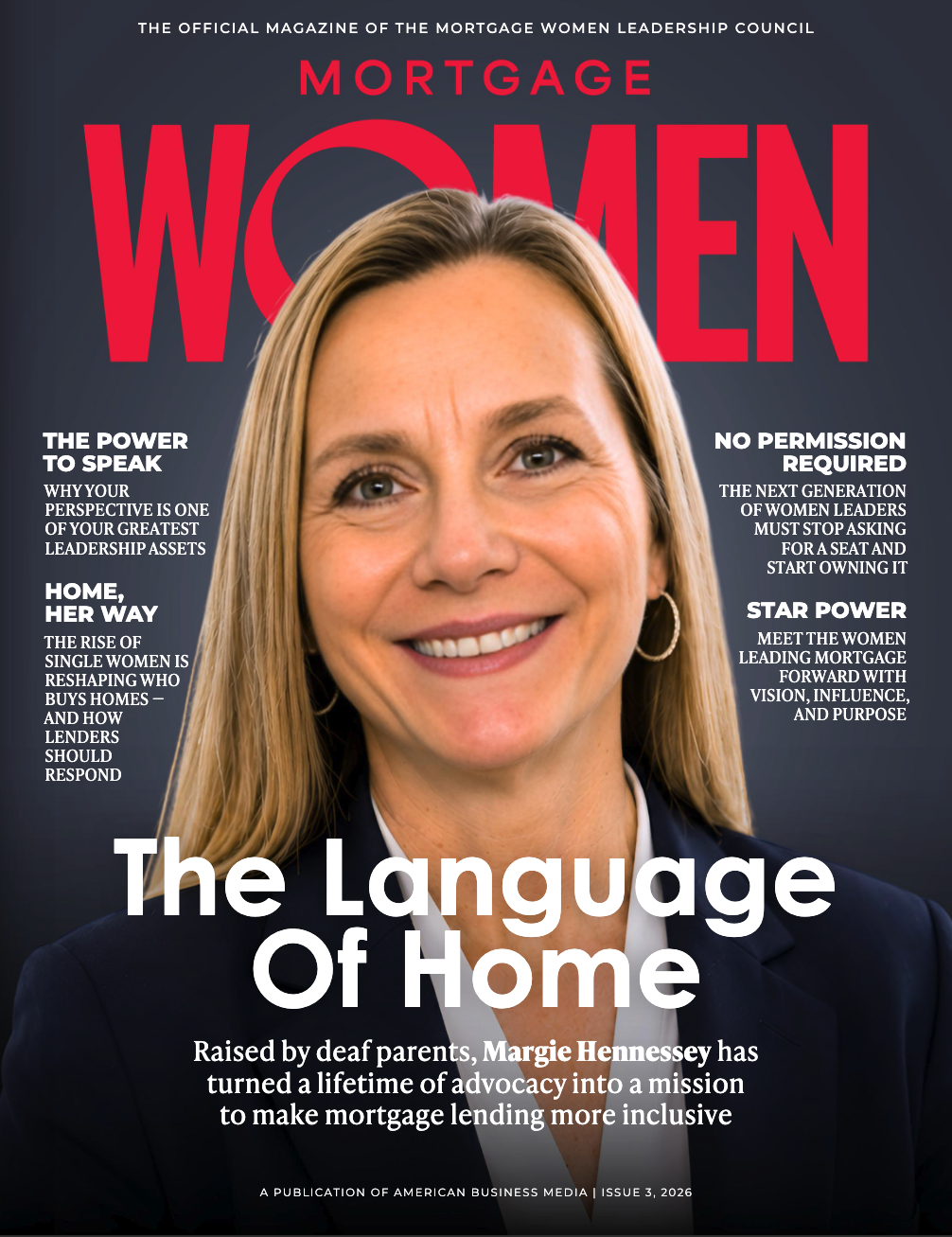

MaxClass is a woman-owned company, and we're offering MWLC members 65% off your continuing education when you use our code WOMENWIN.
MaxClass is a woman-owned company, and we're offering MWLC members 65% off your continuing education. Become a member for our unique code.


Learning is a constant ever-evolving necessity in the industry


Single women are now buying more homes than single men

The new rules of mortgage brand awareness

Why women in mortgage are built to become trust architects


How to Build Influence, Drive Performance and Protect Your Time

The unexpected turns that led Mae Mackey to the industry

Why humanity is the most valuable currency in mortgage lending

Three women leaders on why curiosity, courage, and raising your hand matter more than checking every box

How resilience, adaptability, and voice powered Elizabeth Mix’s rise in mortgage banking
.png)
Why the long way around led to clarity, growth, and a more intentional mortgage career

Strong brands don’t just differentiate — they mentor, inspire, and transform the future of mortgage

The industry keeps repeating old mistakes. Here’s how lenders can pivot, prepare, and protect profitability

A surprisingly powerful break from the chaos of grown-up life.

From Charmed to the mortgage industry

A letter from the editor
MaxClass is a woman-owned company, and we're offering MWLC members 65% off your continuing education when you use our code WOMENWIN.
MaxClass is a woman-owned company, and we're offering MWLC members 65% off your continuing education. Become a member for our unique code.

.png)

Single women are now buying more homes than single men
The new rules of mortgage brand awareness
Why women in mortgage are built to become trust architects
A bold truth about women in mortgage leadership
.png)
The women whose vision, leadership, and influence are shaping mortgage’s future

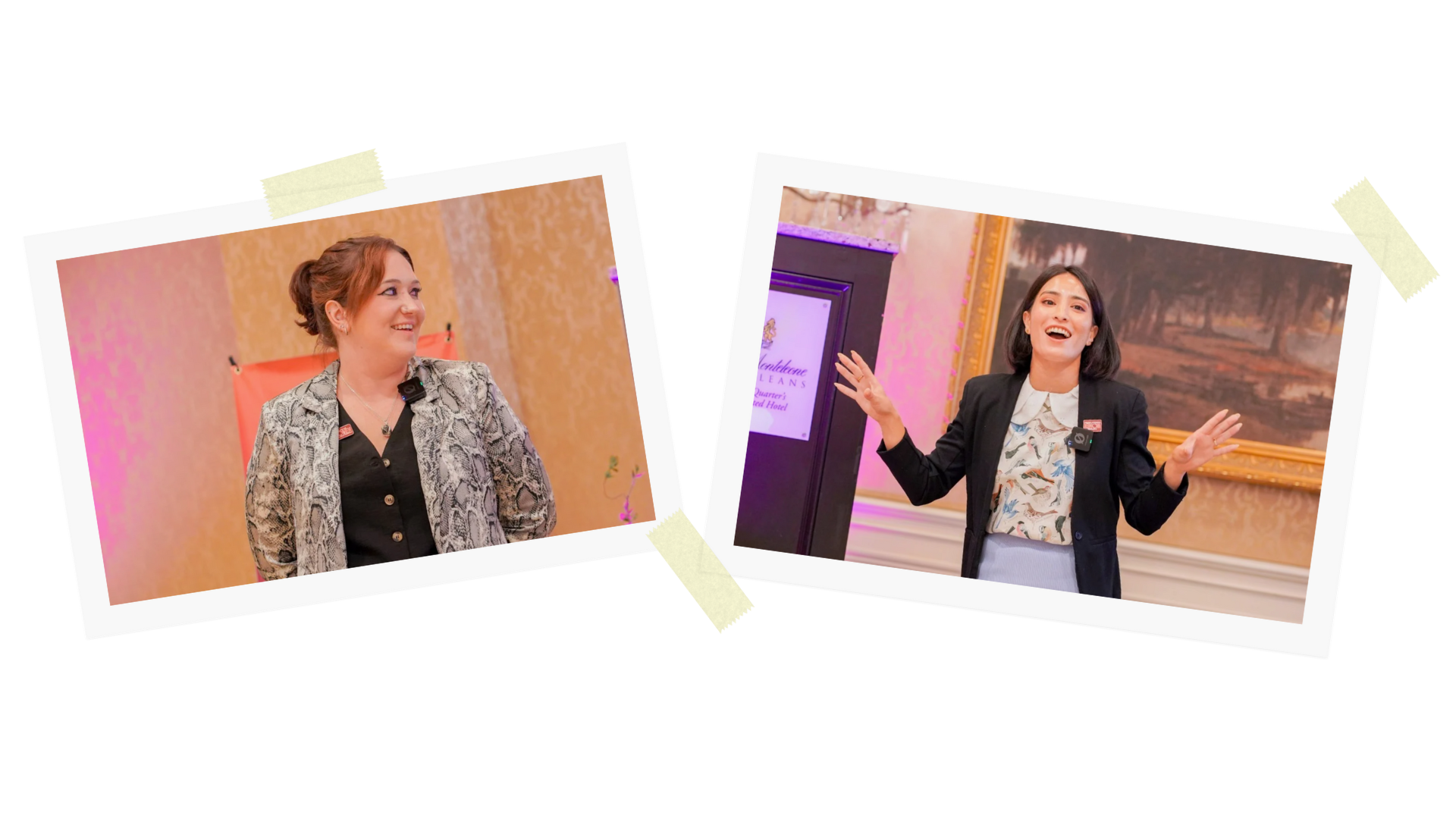
Hosted by the Mortgage Women Leadership Council at the Mortgage Star Conference in New Orleans, this panel explored how mortgage professionals can stand out by giving today's well-informed borrowers a clear, compelling reason to choose them.


.jpg)


.png)












.png)












.png)








.png)



Lorem ipsum dolor sit amet, consectetur adipiscing elit. Suspendisse varius enim in eros elementum tristique. Duis cursus, mi quis viverra ornare, eros dolor interdum nulla, ut commodo diam libero vitae erat. Aenean faucibus nibh et justo cursus id rutrum lorem imperdiet. Nunc ut sem vitae risus tristique posuere.
Lorem ipsum dolor sit amet, consectetur adipiscing elit. Suspendisse varius enim in eros elementum tristique. Duis cursus, mi quis viverra ornare, eros dolor interdum nulla, ut commodo diam libero vitae erat. Aenean faucibus nibh et justo cursus id rutrum lorem imperdiet. Nunc ut sem vitae risus tristique posuere.