

.png)




Close
.svg)


In conference rooms across the country, talented, capable women are bringing valuable expertise, strategic thinking, and innovative ideas to the table. Yet many still find themselves hesitating before speaking up in meetings — or worse, feeling unheard after they do.
The challenge isn’t a lack of competence. Women in leadership roles have earned their seats through hard work, expertise, and proven results. The challenge is often navigating workplace dynamics that can make it difficult to confidently contribute, advocate for ideas, and ensure their voices carry the influence they deserve.
In the mortgage industry, where relationships, communication, and leadership are essential to success, the ability to speak up effectively is more than a professional skill — it’s a career advantage.
Every time you share an idea, ask a thoughtful question, or offer a different perspective, you contribute to better decision-making. Diverse viewpoints lead to stronger strategies, improved problem-solving, and more innovative outcomes.
Yet many women wait until their ideas are perfectly formed before speaking. Meanwhile, others may share thoughts more freely, shaping the conversation and influencing decisions in real time.
The reality is simple: if your expertise isn’t heard, it can’t have impact.
Speaking up isn’t about being the loudest person in the room. It’s about ensuring your knowledge, experience, and perspective are part of the discussion.
The reality is simple: if your expertise isn’t heard, it can’t have impact.
1. Prepare One Key Contribution
Before every meeting, identify at least one point you want to make. It could be an observation, a question, a recommendation, or a potential solution.
Having a planned contribution reduces anxiety and increases confidence. Rather than waiting for the “perfect” moment, you’ll enter the meeting with a clear intention to participate.
Ask yourself:
What insight can I offer?
What question needs to be asked?
What value can I add to this discussion?
2. Speak Earlier, Not Later
Many women wait for the ideal opening before contributing. Unfortunately, that opportunity often never comes.
A simple strategy is to speak within the first ten minutes of the meeting. Whether you’re sharing an update, asking a question, or agreeing with a colleague’s point, contributing early establishes your presence and makes it easier to participate throughout the remainder of the discussion.
Confidence often follows action — not the other way around.
Every time you share an idea, ask a thoughtful question, or offer a different perspective, you contribute to better decision-making.
3. Replace Apologies with Authority
Too often, women unintentionally diminish their message with phrases such as:
“This may be a silly idea, but … ”
“I could be wrong … ”
“Sorry, just one thought … ”
While humility is valuable, excessive qualifying language can weaken an otherwise strong contribution.
Instead, try:
“One consideration is … ”
“Based on our data … ”
“I recommend … ”
“What I’m seeing is … ”
Small language shifts create a stronger executive presence and reinforce credibility.
4. Advocate for Your Ideas
If your idea is overlooked and later repeated by someone else, don’t be discouraged. This happens more often than many people realize.
Instead of withdrawing, confidently reconnect yourself to the idea:
“Thank you for building on the point I mentioned earlier. I think that approach could help us achieve our goals.”
This response is professional, collaborative, and reinforces your contribution without creating tension.
5. Support Other Women’s Voices
Empowerment is not a solo endeavor. One of the most effective ways to create inclusive conversations is to actively support other women in meetings.
Consider phrases such as:
“I’d like to hear Sarah’s perspective on this.”
“That’s similar to the point Jennifer raised earlier.”
“Can we circle back to the recommendation that was just mentioned?”
When women amplify one another’s ideas, everyone benefits.
Having a planned contribution reduces anxiety and increases confidence. Rather than waiting for the “perfect” moment, you’ll enter the meeting with a clear intention to participate.
Many people assume confident speakers are simply born that way. In reality, confidence is developed through repetition and experience.
Each time you speak up, you strengthen your ability to do it again.
Start small. Ask a question. Share an observation. Offer a recommendation. Over time, those moments accumulate into a leadership presence that feels authentic and natural.
Remember, confidence is not the absence of nerves. It’s the willingness to contribute despite them.
For women in the mortgage industry, leadership continues to evolve. More women are stepping into executive roles, leading teams, influencing strategy, and shaping the future of the profession.
With those opportunities comes the responsibility to use our voices — not only for ourselves, but also for the colleagues and future leaders who are watching.
Your perspective matters.
Your expertise matters.
And the room benefits when you speak.
The next time you’re sitting in a meeting and debating whether to share your thought, consider this: someone in that room needs to hear what you have to say.
So raise your hand, lean in, and contribute with confidence. You earned your seat at the table. Make sure your voice has a place there too.
In conference rooms across the country, talented, capable women are bringing valuable expertise, strategic thinking, and innovative ideas to the table. Yet many still find themselves hesitating before speaking up in meetings — or worse, feeling unheard after they do.
The challenge isn’t a lack of competence. Women in leadership roles have earned their seats through hard work, expertise, and proven results. The challenge is often navigating workplace dynamics that can make it difficult to confidently contribute, advocate for ideas, and ensure their voices carry the influence they deserve.
In the mortgage industry, where relationships, communication, and leadership are essential to success, the ability to speak up effectively is more than a professional skill — it’s a career advantage.
Every time you share an idea, ask a thoughtful question, or offer a different perspective, you contribute to better decision-making. Diverse viewpoints lead to stronger strategies, improved problem-solving, and more innovative outcomes.
Yet many women wait until their ideas are perfectly formed before speaking. Meanwhile, others may share thoughts more freely, shaping the conversation and influencing decisions in real time.
The reality is simple: if your expertise isn’t heard, it can’t have impact.
Speaking up isn’t about being the loudest person in the room. It’s about ensuring your knowledge, experience, and perspective are part of the discussion.
The reality is simple: if your expertise isn’t heard, it can’t have impact.
1. Prepare One Key Contribution
Before every meeting, identify at least one point you want to make. It could be an observation, a question, a recommendation, or a potential solution.
Having a planned contribution reduces anxiety and increases confidence. Rather than waiting for the “perfect” moment, you’ll enter the meeting with a clear intention to participate.
Ask yourself:
What insight can I offer?
What question needs to be asked?
What value can I add to this discussion?
2. Speak Earlier, Not Later
Many women wait for the ideal opening before contributing. Unfortunately, that opportunity often never comes.
A simple strategy is to speak within the first ten minutes of the meeting. Whether you’re sharing an update, asking a question, or agreeing with a colleague’s point, contributing early establishes your presence and makes it easier to participate throughout the remainder of the discussion.
Confidence often follows action — not the other way around.
Every time you share an idea, ask a thoughtful question, or offer a different perspective, you contribute to better decision-making.
3. Replace Apologies with Authority
Too often, women unintentionally diminish their message with phrases such as:
“This may be a silly idea, but … ”
“I could be wrong … ”
“Sorry, just one thought … ”
While humility is valuable, excessive qualifying language can weaken an otherwise strong contribution.
Instead, try:
“One consideration is … ”
“Based on our data … ”
“I recommend … ”
“What I’m seeing is … ”
Small language shifts create a stronger executive presence and reinforce credibility.
4. Advocate for Your Ideas
If your idea is overlooked and later repeated by someone else, don’t be discouraged. This happens more often than many people realize.
Instead of withdrawing, confidently reconnect yourself to the idea:
“Thank you for building on the point I mentioned earlier. I think that approach could help us achieve our goals.”
This response is professional, collaborative, and reinforces your contribution without creating tension.
5. Support Other Women’s Voices
Empowerment is not a solo endeavor. One of the most effective ways to create inclusive conversations is to actively support other women in meetings.
Consider phrases such as:
“I’d like to hear Sarah’s perspective on this.”
“That’s similar to the point Jennifer raised earlier.”
“Can we circle back to the recommendation that was just mentioned?”
When women amplify one another’s ideas, everyone benefits.
Having a planned contribution reduces anxiety and increases confidence. Rather than waiting for the “perfect” moment, you’ll enter the meeting with a clear intention to participate.
Many people assume confident speakers are simply born that way. In reality, confidence is developed through repetition and experience.
Each time you speak up, you strengthen your ability to do it again.
Start small. Ask a question. Share an observation. Offer a recommendation. Over time, those moments accumulate into a leadership presence that feels authentic and natural.
Remember, confidence is not the absence of nerves. It’s the willingness to contribute despite them.
For women in the mortgage industry, leadership continues to evolve. More women are stepping into executive roles, leading teams, influencing strategy, and shaping the future of the profession.
With those opportunities comes the responsibility to use our voices — not only for ourselves, but also for the colleagues and future leaders who are watching.
Your perspective matters.
Your expertise matters.
And the room benefits when you speak.
The next time you’re sitting in a meeting and debating whether to share your thought, consider this: someone in that room needs to hear what you have to say.
So raise your hand, lean in, and contribute with confidence. You earned your seat at the table. Make sure your voice has a place there too.
In conference rooms across the country, talented, capable women are bringing valuable expertise, strategic thinking, and innovative ideas to the table. Yet many still find themselves hesitating before speaking up in meetings — or worse, feeling unheard after they do.
The challenge isn’t a lack of competence. Women in leadership roles have earned their seats through hard work, expertise, and proven results. The challenge is often navigating workplace dynamics that can make it difficult to confidently contribute, advocate for ideas, and ensure their voices carry the influence they deserve.
In the mortgage industry, where relationships, communication, and leadership are essential to success, the ability to speak up effectively is more than a professional skill — it’s a career advantage.
Every time you share an idea, ask a thoughtful question, or offer a different perspective, you contribute to better decision-making. Diverse viewpoints lead to stronger strategies, improved problem-solving, and more innovative outcomes.
Yet many women wait until their ideas are perfectly formed before speaking. Meanwhile, others may share thoughts more freely, shaping the conversation and influencing decisions in real time.
The reality is simple: if your expertise isn’t heard, it can’t have impact.
Speaking up isn’t about being the loudest person in the room. It’s about ensuring your knowledge, experience, and perspective are part of the discussion.
The reality is simple: if your expertise isn’t heard, it can’t have impact.
1. Prepare One Key Contribution
Before every meeting, identify at least one point you want to make. It could be an observation, a question, a recommendation, or a potential solution.
Having a planned contribution reduces anxiety and increases confidence. Rather than waiting for the “perfect” moment, you’ll enter the meeting with a clear intention to participate.
Ask yourself:
What insight can I offer?
What question needs to be asked?
What value can I add to this discussion?
2. Speak Earlier, Not Later
Many women wait for the ideal opening before contributing. Unfortunately, that opportunity often never comes.
A simple strategy is to speak within the first ten minutes of the meeting. Whether you’re sharing an update, asking a question, or agreeing with a colleague’s point, contributing early establishes your presence and makes it easier to participate throughout the remainder of the discussion.
Confidence often follows action — not the other way around.
Every time you share an idea, ask a thoughtful question, or offer a different perspective, you contribute to better decision-making.
3. Replace Apologies with Authority
Too often, women unintentionally diminish their message with phrases such as:
“This may be a silly idea, but … ”
“I could be wrong … ”
“Sorry, just one thought … ”
While humility is valuable, excessive qualifying language can weaken an otherwise strong contribution.
Instead, try:
“One consideration is … ”
“Based on our data … ”
“I recommend … ”
“What I’m seeing is … ”
Small language shifts create a stronger executive presence and reinforce credibility.
4. Advocate for Your Ideas
If your idea is overlooked and later repeated by someone else, don’t be discouraged. This happens more often than many people realize.
Instead of withdrawing, confidently reconnect yourself to the idea:
“Thank you for building on the point I mentioned earlier. I think that approach could help us achieve our goals.”
This response is professional, collaborative, and reinforces your contribution without creating tension.
5. Support Other Women’s Voices
Empowerment is not a solo endeavor. One of the most effective ways to create inclusive conversations is to actively support other women in meetings.
Consider phrases such as:
“I’d like to hear Sarah’s perspective on this.”
“That’s similar to the point Jennifer raised earlier.”
“Can we circle back to the recommendation that was just mentioned?”
When women amplify one another’s ideas, everyone benefits.
Having a planned contribution reduces anxiety and increases confidence. Rather than waiting for the “perfect” moment, you’ll enter the meeting with a clear intention to participate.
Many people assume confident speakers are simply born that way. In reality, confidence is developed through repetition and experience.
Each time you speak up, you strengthen your ability to do it again.
Start small. Ask a question. Share an observation. Offer a recommendation. Over time, those moments accumulate into a leadership presence that feels authentic and natural.
Remember, confidence is not the absence of nerves. It’s the willingness to contribute despite them.
For women in the mortgage industry, leadership continues to evolve. More women are stepping into executive roles, leading teams, influencing strategy, and shaping the future of the profession.
With those opportunities comes the responsibility to use our voices — not only for ourselves, but also for the colleagues and future leaders who are watching.
Your perspective matters.
Your expertise matters.
And the room benefits when you speak.
The next time you’re sitting in a meeting and debating whether to share your thought, consider this: someone in that room needs to hear what you have to say.
So raise your hand, lean in, and contribute with confidence. You earned your seat at the table. Make sure your voice has a place there too.
In conference rooms across the country, talented, capable women are bringing valuable expertise, strategic thinking, and innovative ideas to the table. Yet many still find themselves hesitating before speaking up in meetings — or worse, feeling unheard after they do.
The challenge isn’t a lack of competence. Women in leadership roles have earned their seats through hard work, expertise, and proven results. The challenge is often navigating workplace dynamics that can make it difficult to confidently contribute, advocate for ideas, and ensure their voices carry the influence they deserve.
In the mortgage industry, where relationships, communication, and leadership are essential to success, the ability to speak up effectively is more than a professional skill — it’s a career advantage.
Every time you share an idea, ask a thoughtful question, or offer a different perspective, you contribute to better decision-making. Diverse viewpoints lead to stronger strategies, improved problem-solving, and more innovative outcomes.
Yet many women wait until their ideas are perfectly formed before speaking. Meanwhile, others may share thoughts more freely, shaping the conversation and influencing decisions in real time.
The reality is simple: if your expertise isn’t heard, it can’t have impact.
Speaking up isn’t about being the loudest person in the room. It’s about ensuring your knowledge, experience, and perspective are part of the discussion.
The reality is simple: if your expertise isn’t heard, it can’t have impact.
1. Prepare One Key Contribution
Before every meeting, identify at least one point you want to make. It could be an observation, a question, a recommendation, or a potential solution.
Having a planned contribution reduces anxiety and increases confidence. Rather than waiting for the “perfect” moment, you’ll enter the meeting with a clear intention to participate.
Ask yourself:
What insight can I offer?
What question needs to be asked?
What value can I add to this discussion?
2. Speak Earlier, Not Later
Many women wait for the ideal opening before contributing. Unfortunately, that opportunity often never comes.
A simple strategy is to speak within the first ten minutes of the meeting. Whether you’re sharing an update, asking a question, or agreeing with a colleague’s point, contributing early establishes your presence and makes it easier to participate throughout the remainder of the discussion.
Confidence often follows action — not the other way around.
Every time you share an idea, ask a thoughtful question, or offer a different perspective, you contribute to better decision-making.
3. Replace Apologies with Authority
Too often, women unintentionally diminish their message with phrases such as:
“This may be a silly idea, but … ”
“I could be wrong … ”
“Sorry, just one thought … ”
While humility is valuable, excessive qualifying language can weaken an otherwise strong contribution.
Instead, try:
“One consideration is … ”
“Based on our data … ”
“I recommend … ”
“What I’m seeing is … ”
Small language shifts create a stronger executive presence and reinforce credibility.
4. Advocate for Your Ideas
If your idea is overlooked and later repeated by someone else, don’t be discouraged. This happens more often than many people realize.
Instead of withdrawing, confidently reconnect yourself to the idea:
“Thank you for building on the point I mentioned earlier. I think that approach could help us achieve our goals.”
This response is professional, collaborative, and reinforces your contribution without creating tension.
5. Support Other Women’s Voices
Empowerment is not a solo endeavor. One of the most effective ways to create inclusive conversations is to actively support other women in meetings.
Consider phrases such as:
“I’d like to hear Sarah’s perspective on this.”
“That’s similar to the point Jennifer raised earlier.”
“Can we circle back to the recommendation that was just mentioned?”
When women amplify one another’s ideas, everyone benefits.
Having a planned contribution reduces anxiety and increases confidence. Rather than waiting for the “perfect” moment, you’ll enter the meeting with a clear intention to participate.
Many people assume confident speakers are simply born that way. In reality, confidence is developed through repetition and experience.
Each time you speak up, you strengthen your ability to do it again.
Start small. Ask a question. Share an observation. Offer a recommendation. Over time, those moments accumulate into a leadership presence that feels authentic and natural.
Remember, confidence is not the absence of nerves. It’s the willingness to contribute despite them.
For women in the mortgage industry, leadership continues to evolve. More women are stepping into executive roles, leading teams, influencing strategy, and shaping the future of the profession.
With those opportunities comes the responsibility to use our voices — not only for ourselves, but also for the colleagues and future leaders who are watching.
Your perspective matters.
Your expertise matters.
And the room benefits when you speak.
The next time you’re sitting in a meeting and debating whether to share your thought, consider this: someone in that room needs to hear what you have to say.
So raise your hand, lean in, and contribute with confidence. You earned your seat at the table. Make sure your voice has a place there too.

MaxClass is a woman-owned company, and we're offering MWLC members 65% off your continuing education when you use our code WOMENWIN.
MaxClass is a woman-owned company, and we're offering MWLC members 65% off your continuing education. Become a member for our unique code.


Learning is a constant ever-evolving necessity in the industry

Single women are now buying more homes than single men

The new rules of mortgage brand awareness

Why women in mortgage are built to become trust architects


How to Build Influence, Drive Performance and Protect Your Time

The unexpected turns that led Mae Mackey to the industry

Why humanity is the most valuable currency in mortgage lending

Three women leaders on why curiosity, courage, and raising your hand matter more than checking every box

How resilience, adaptability, and voice powered Elizabeth Mix’s rise in mortgage banking
.png)
Why the long way around led to clarity, growth, and a more intentional mortgage career

Strong brands don’t just differentiate — they mentor, inspire, and transform the future of mortgage

The industry keeps repeating old mistakes. Here’s how lenders can pivot, prepare, and protect profitability

A surprisingly powerful break from the chaos of grown-up life.

From Charmed to the mortgage industry

A letter from the editor
MaxClass is a woman-owned company, and we're offering MWLC members 65% off your continuing education when you use our code WOMENWIN.
MaxClass is a woman-owned company, and we're offering MWLC members 65% off your continuing education. Become a member for our unique code.
.png)


Homeownership has long represented more than a set of keys.
.png)
Sometimes, managing it all starts with admitting just how much we’re carrying. This conversation brings women together to talk honestly about the realities of balancing careers, responsibilities, and the people who depend on us.
Learning is a constant ever-evolving necessity in the industry

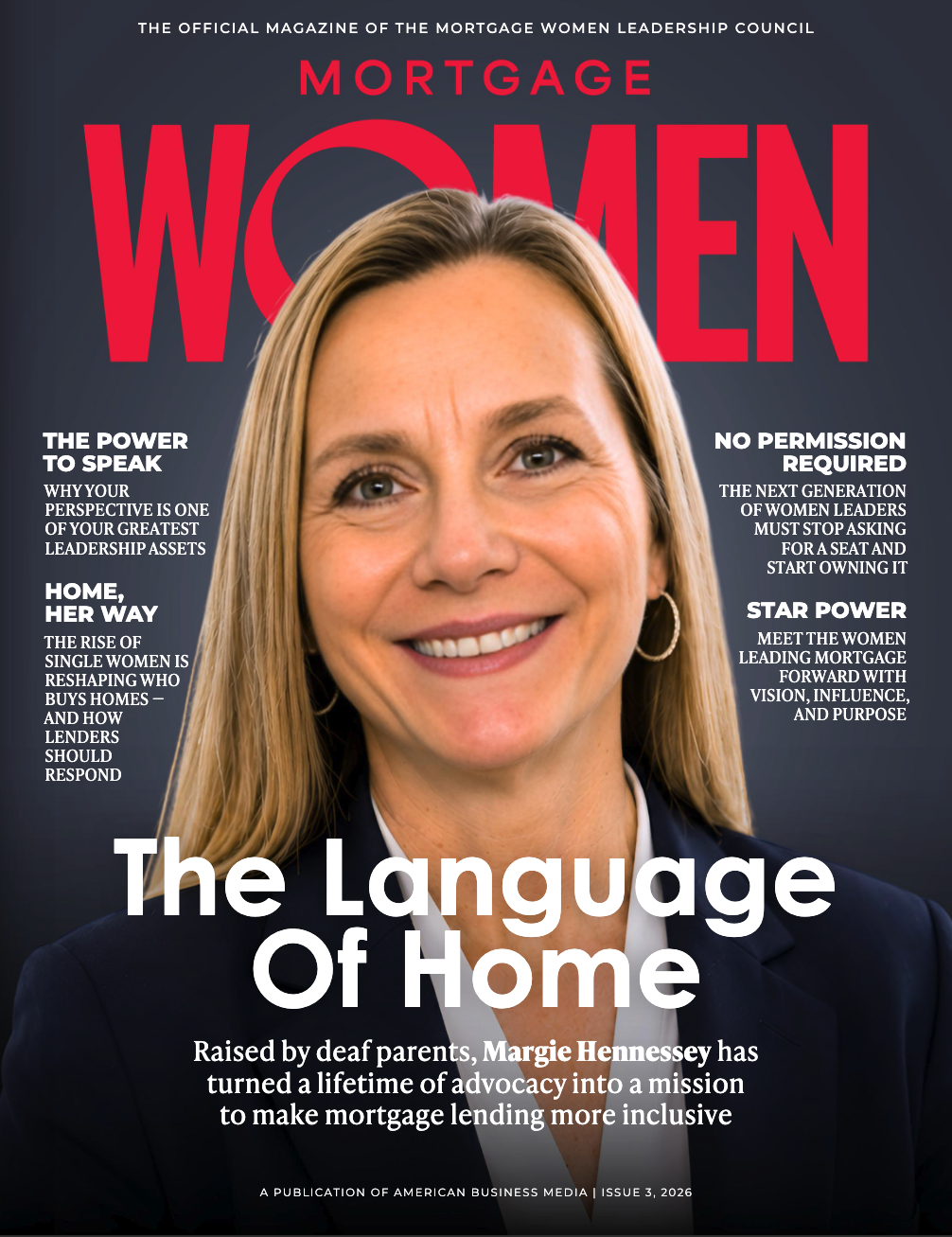
Margie Hennessey strives to make homeownership more accessible to the deaf community through direct communication via ASL
Single women are now buying more homes than single men


.jpg)


.png)
.png)












.png)











.png)












.png)



Lorem ipsum dolor sit amet, consectetur adipiscing elit. Suspendisse varius enim in eros elementum tristique. Duis cursus, mi quis viverra ornare, eros dolor interdum nulla, ut commodo diam libero vitae erat. Aenean faucibus nibh et justo cursus id rutrum lorem imperdiet. Nunc ut sem vitae risus tristique posuere.
Lorem ipsum dolor sit amet, consectetur adipiscing elit. Suspendisse varius enim in eros elementum tristique. Duis cursus, mi quis viverra ornare, eros dolor interdum nulla, ut commodo diam libero vitae erat. Aenean faucibus nibh et justo cursus id rutrum lorem imperdiet. Nunc ut sem vitae risus tristique posuere.