
.png)




Close
.svg)


Q: Following recent changes in the mortgage market, the industry is clearly undergoing a significant transformation and modernization. From your perspective, why is that important?
Bodda:
Homeownership is still viewed as a significant milestone for most people, but for a variety of reasons, it has increasingly felt more out of reach for many aspiring homebuyers over the last several years. We recently surveyed U.S. renters and 67% report that saving for a down payment is the biggest barrier to homeownership, followed by home prices and low credit scores at 66% and 51%, respectively.
Despite the barriers, there’s still a sense of optimism. Nearly half of current renters believe they’ll be ready to purchase a home within the next four years, and that figure jumps to 67% over the next eight years.
Consumer optimism inspires us to modernize the mortgage market. We have a responsibility to help more people achieve the dream of homeownership. That means uncovering ways to support a broader population of aspiring homebuyers put their best foot forward when applying for a mortgage.
Q: How can a more modern approach to data help strengthen financial inclusion while maintaining the safety and soundness of the mortgage market?
Bodda:
Modernization starts with using better data and technology. Every credit score and mortgage decision is powered by data, and we believe expanding access to timely, reliable data can open the door for more people to achieve the dream of homeownership.
In fact, Federal Housing Finance Agency (FHFA) Director Pulte’s recent announcement to approve the use of more modern credit scores, including VantageScore 4.0, is the latest step in the right direction.
Newer credit scoring models, such as VantageScore 4.0, are designed to incorporate alternative data sources, like rent, utilities and other predictive payments. These alternative data sources provide lenders a more comprehensive view of a consumer’s financial situation. That means lenders can evaluate more consumers, particularly those with limited-to-no credit history.
As the first credit reporting company to include positive rental payments on credit reports, Experian recognizes how much of a gamechanger alternative data sources can be in improving consumers’ access to homeownership. Paying rent on time is a relevant indicator of creditworthiness, and yet it hasn’t historically factored into mortgage credit scoring models.
Similarly, cashflow insights can be a transformative data source for financial inclusion and lenders’ risk assessments. With cashflow insights, lenders have a clearer view of a consumer's financial behavior, such as income, expenses, cash reserves, and more, to enhance risk assessments with up to 25% lift in predictive performance.
At the end of the day, the more data lenders have at their disposal, the better positioned they will be to make more informed lending decisions and grow their portfolios.
Q: How important is infrastructure and technology to the modernization of the mortgage market?
Bodda:
For the industry to completely transition to a more modern approach to mortgage decisioning, we have to update existing infrastructure. This includes compliance and regulatory frameworks, the technology to deliver the data, as well as consumer support to address any questions about the data and process. That’s where Experian thrives.
We are stewards of information and invest heavily in our systems and technology to ensure our data is current, accurate and relevant for lenders. Traditional credit data remains the most tested and reliable assessment tool, and it is made even more powerful with newer, alternative data sources like rent payments. Experian leads the pack with our ability to deliver alternative data insights to lenders with the same rigor and precision as more traditional data sources.
Q: Looking ahead, what should lenders focus on to build both growth and consumer trust in this evolving landscape?
Bodda:
We’re entering a new era in the mortgage market, and lenders distinguish themselves by the way they invest in consumers. That means meeting consumers where they are and finding ways to help make homeownership more affordable and achievable. At the heart of it, this comes down to using industry-leading data.
But using data to expand the universe of consumers who can potentially qualify for a mortgage doesn’t just benefit consumers, it’s an opportunity for portfolio growth. Extending a mortgage to a first-time home buyer could lay the foundation for a lifelong relationship. Investing in data and consumers could translate into impactful return on a lender’s bottom line.
Q: Following recent changes in the mortgage market, the industry is clearly undergoing a significant transformation and modernization. From your perspective, why is that important?
Bodda:
Homeownership is still viewed as a significant milestone for most people, but for a variety of reasons, it has increasingly felt more out of reach for many aspiring homebuyers over the last several years. We recently surveyed U.S. renters and 67% report that saving for a down payment is the biggest barrier to homeownership, followed by home prices and low credit scores at 66% and 51%, respectively.
Despite the barriers, there’s still a sense of optimism. Nearly half of current renters believe they’ll be ready to purchase a home within the next four years, and that figure jumps to 67% over the next eight years.
Consumer optimism inspires us to modernize the mortgage market. We have a responsibility to help more people achieve the dream of homeownership. That means uncovering ways to support a broader population of aspiring homebuyers put their best foot forward when applying for a mortgage.
Q: How can a more modern approach to data help strengthen financial inclusion while maintaining the safety and soundness of the mortgage market?
Bodda:
Modernization starts with using better data and technology. Every credit score and mortgage decision is powered by data, and we believe expanding access to timely, reliable data can open the door for more people to achieve the dream of homeownership.
In fact, Federal Housing Finance Agency (FHFA) Director Pulte’s recent announcement to approve the use of more modern credit scores, including VantageScore 4.0, is the latest step in the right direction.
Newer credit scoring models, such as VantageScore 4.0, are designed to incorporate alternative data sources, like rent, utilities and other predictive payments. These alternative data sources provide lenders a more comprehensive view of a consumer’s financial situation. That means lenders can evaluate more consumers, particularly those with limited-to-no credit history.
As the first credit reporting company to include positive rental payments on credit reports, Experian recognizes how much of a gamechanger alternative data sources can be in improving consumers’ access to homeownership. Paying rent on time is a relevant indicator of creditworthiness, and yet it hasn’t historically factored into mortgage credit scoring models.
Similarly, cashflow insights can be a transformative data source for financial inclusion and lenders’ risk assessments. With cashflow insights, lenders have a clearer view of a consumer's financial behavior, such as income, expenses, cash reserves, and more, to enhance risk assessments with up to 25% lift in predictive performance.
At the end of the day, the more data lenders have at their disposal, the better positioned they will be to make more informed lending decisions and grow their portfolios.
Q: How important is infrastructure and technology to the modernization of the mortgage market?
Bodda:
For the industry to completely transition to a more modern approach to mortgage decisioning, we have to update existing infrastructure. This includes compliance and regulatory frameworks, the technology to deliver the data, as well as consumer support to address any questions about the data and process. That’s where Experian thrives.
We are stewards of information and invest heavily in our systems and technology to ensure our data is current, accurate and relevant for lenders. Traditional credit data remains the most tested and reliable assessment tool, and it is made even more powerful with newer, alternative data sources like rent payments. Experian leads the pack with our ability to deliver alternative data insights to lenders with the same rigor and precision as more traditional data sources.
Q: Looking ahead, what should lenders focus on to build both growth and consumer trust in this evolving landscape?
Bodda:
We’re entering a new era in the mortgage market, and lenders distinguish themselves by the way they invest in consumers. That means meeting consumers where they are and finding ways to help make homeownership more affordable and achievable. At the heart of it, this comes down to using industry-leading data.
But using data to expand the universe of consumers who can potentially qualify for a mortgage doesn’t just benefit consumers, it’s an opportunity for portfolio growth. Extending a mortgage to a first-time home buyer could lay the foundation for a lifelong relationship. Investing in data and consumers could translate into impactful return on a lender’s bottom line.
Q: Following recent changes in the mortgage market, the industry is clearly undergoing a significant transformation and modernization. From your perspective, why is that important?
Bodda:
Homeownership is still viewed as a significant milestone for most people, but for a variety of reasons, it has increasingly felt more out of reach for many aspiring homebuyers over the last several years. We recently surveyed U.S. renters and 67% report that saving for a down payment is the biggest barrier to homeownership, followed by home prices and low credit scores at 66% and 51%, respectively.
Despite the barriers, there’s still a sense of optimism. Nearly half of current renters believe they’ll be ready to purchase a home within the next four years, and that figure jumps to 67% over the next eight years.
Consumer optimism inspires us to modernize the mortgage market. We have a responsibility to help more people achieve the dream of homeownership. That means uncovering ways to support a broader population of aspiring homebuyers put their best foot forward when applying for a mortgage.
Q: How can a more modern approach to data help strengthen financial inclusion while maintaining the safety and soundness of the mortgage market?
Bodda:
Modernization starts with using better data and technology. Every credit score and mortgage decision is powered by data, and we believe expanding access to timely, reliable data can open the door for more people to achieve the dream of homeownership.
In fact, Federal Housing Finance Agency (FHFA) Director Pulte’s recent announcement to approve the use of more modern credit scores, including VantageScore 4.0, is the latest step in the right direction.
Newer credit scoring models, such as VantageScore 4.0, are designed to incorporate alternative data sources, like rent, utilities and other predictive payments. These alternative data sources provide lenders a more comprehensive view of a consumer’s financial situation. That means lenders can evaluate more consumers, particularly those with limited-to-no credit history.
As the first credit reporting company to include positive rental payments on credit reports, Experian recognizes how much of a gamechanger alternative data sources can be in improving consumers’ access to homeownership. Paying rent on time is a relevant indicator of creditworthiness, and yet it hasn’t historically factored into mortgage credit scoring models.
Similarly, cashflow insights can be a transformative data source for financial inclusion and lenders’ risk assessments. With cashflow insights, lenders have a clearer view of a consumer's financial behavior, such as income, expenses, cash reserves, and more, to enhance risk assessments with up to 25% lift in predictive performance.
At the end of the day, the more data lenders have at their disposal, the better positioned they will be to make more informed lending decisions and grow their portfolios.
Q: How important is infrastructure and technology to the modernization of the mortgage market?
Bodda:
For the industry to completely transition to a more modern approach to mortgage decisioning, we have to update existing infrastructure. This includes compliance and regulatory frameworks, the technology to deliver the data, as well as consumer support to address any questions about the data and process. That’s where Experian thrives.
We are stewards of information and invest heavily in our systems and technology to ensure our data is current, accurate and relevant for lenders. Traditional credit data remains the most tested and reliable assessment tool, and it is made even more powerful with newer, alternative data sources like rent payments. Experian leads the pack with our ability to deliver alternative data insights to lenders with the same rigor and precision as more traditional data sources.
Q: Looking ahead, what should lenders focus on to build both growth and consumer trust in this evolving landscape?
Bodda:
We’re entering a new era in the mortgage market, and lenders distinguish themselves by the way they invest in consumers. That means meeting consumers where they are and finding ways to help make homeownership more affordable and achievable. At the heart of it, this comes down to using industry-leading data.
But using data to expand the universe of consumers who can potentially qualify for a mortgage doesn’t just benefit consumers, it’s an opportunity for portfolio growth. Extending a mortgage to a first-time home buyer could lay the foundation for a lifelong relationship. Investing in data and consumers could translate into impactful return on a lender’s bottom line.
Q: Following recent changes in the mortgage market, the industry is clearly undergoing a significant transformation and modernization. From your perspective, why is that important?
Bodda:
Homeownership is still viewed as a significant milestone for most people, but for a variety of reasons, it has increasingly felt more out of reach for many aspiring homebuyers over the last several years. We recently surveyed U.S. renters and 67% report that saving for a down payment is the biggest barrier to homeownership, followed by home prices and low credit scores at 66% and 51%, respectively.
Despite the barriers, there’s still a sense of optimism. Nearly half of current renters believe they’ll be ready to purchase a home within the next four years, and that figure jumps to 67% over the next eight years.
Consumer optimism inspires us to modernize the mortgage market. We have a responsibility to help more people achieve the dream of homeownership. That means uncovering ways to support a broader population of aspiring homebuyers put their best foot forward when applying for a mortgage.
Q: How can a more modern approach to data help strengthen financial inclusion while maintaining the safety and soundness of the mortgage market?
Bodda:
Modernization starts with using better data and technology. Every credit score and mortgage decision is powered by data, and we believe expanding access to timely, reliable data can open the door for more people to achieve the dream of homeownership.
In fact, Federal Housing Finance Agency (FHFA) Director Pulte’s recent announcement to approve the use of more modern credit scores, including VantageScore 4.0, is the latest step in the right direction.
Newer credit scoring models, such as VantageScore 4.0, are designed to incorporate alternative data sources, like rent, utilities and other predictive payments. These alternative data sources provide lenders a more comprehensive view of a consumer’s financial situation. That means lenders can evaluate more consumers, particularly those with limited-to-no credit history.
As the first credit reporting company to include positive rental payments on credit reports, Experian recognizes how much of a gamechanger alternative data sources can be in improving consumers’ access to homeownership. Paying rent on time is a relevant indicator of creditworthiness, and yet it hasn’t historically factored into mortgage credit scoring models.
Similarly, cashflow insights can be a transformative data source for financial inclusion and lenders’ risk assessments. With cashflow insights, lenders have a clearer view of a consumer's financial behavior, such as income, expenses, cash reserves, and more, to enhance risk assessments with up to 25% lift in predictive performance.
At the end of the day, the more data lenders have at their disposal, the better positioned they will be to make more informed lending decisions and grow their portfolios.
Q: How important is infrastructure and technology to the modernization of the mortgage market?
Bodda:
For the industry to completely transition to a more modern approach to mortgage decisioning, we have to update existing infrastructure. This includes compliance and regulatory frameworks, the technology to deliver the data, as well as consumer support to address any questions about the data and process. That’s where Experian thrives.
We are stewards of information and invest heavily in our systems and technology to ensure our data is current, accurate and relevant for lenders. Traditional credit data remains the most tested and reliable assessment tool, and it is made even more powerful with newer, alternative data sources like rent payments. Experian leads the pack with our ability to deliver alternative data insights to lenders with the same rigor and precision as more traditional data sources.
Q: Looking ahead, what should lenders focus on to build both growth and consumer trust in this evolving landscape?
Bodda:
We’re entering a new era in the mortgage market, and lenders distinguish themselves by the way they invest in consumers. That means meeting consumers where they are and finding ways to help make homeownership more affordable and achievable. At the heart of it, this comes down to using industry-leading data.
But using data to expand the universe of consumers who can potentially qualify for a mortgage doesn’t just benefit consumers, it’s an opportunity for portfolio growth. Extending a mortgage to a first-time home buyer could lay the foundation for a lifelong relationship. Investing in data and consumers could translate into impactful return on a lender’s bottom line.


MaxClass is a woman-owned company, and we're offering MWLC members 65% off your continuing education when you use our code WOMENWIN.
MaxClass is a woman-owned company, and we're offering MWLC members 65% off your continuing education. Become a member for our unique code.

.jpg)
You've earned your place. Don't let others make you feel differently.

PBJ Mortgage makes home financing as easy as lunch



Three women leaders on why curiosity, courage, and raising your hand matter more than checking every box

How resilience, adaptability, and voice powered Elizabeth Mix’s rise in mortgage banking
.png)
Learn how address conflict directly and respectfully without escalating tension, give and receive feedback effectively to drive performance and growth, and navigate high-stakes conversations with composure and professionalism.

MaxClass is a woman-owned company, and we're offering MWLC members 65% off your continuing education when you use our code WOMENWIN.
MaxClass is a woman-owned company, and we're offering MWLC members 65% off your continuing education. Become a member for our unique code.

.png)


Homeownership has long represented more than a set of keys.
.png)
Sometimes, managing it all starts with admitting just how much we’re carrying. This conversation brings women together to talk honestly about the realities of balancing careers, responsibilities, and the people who depend on us.

Learning is a constant ever-evolving necessity in the industry

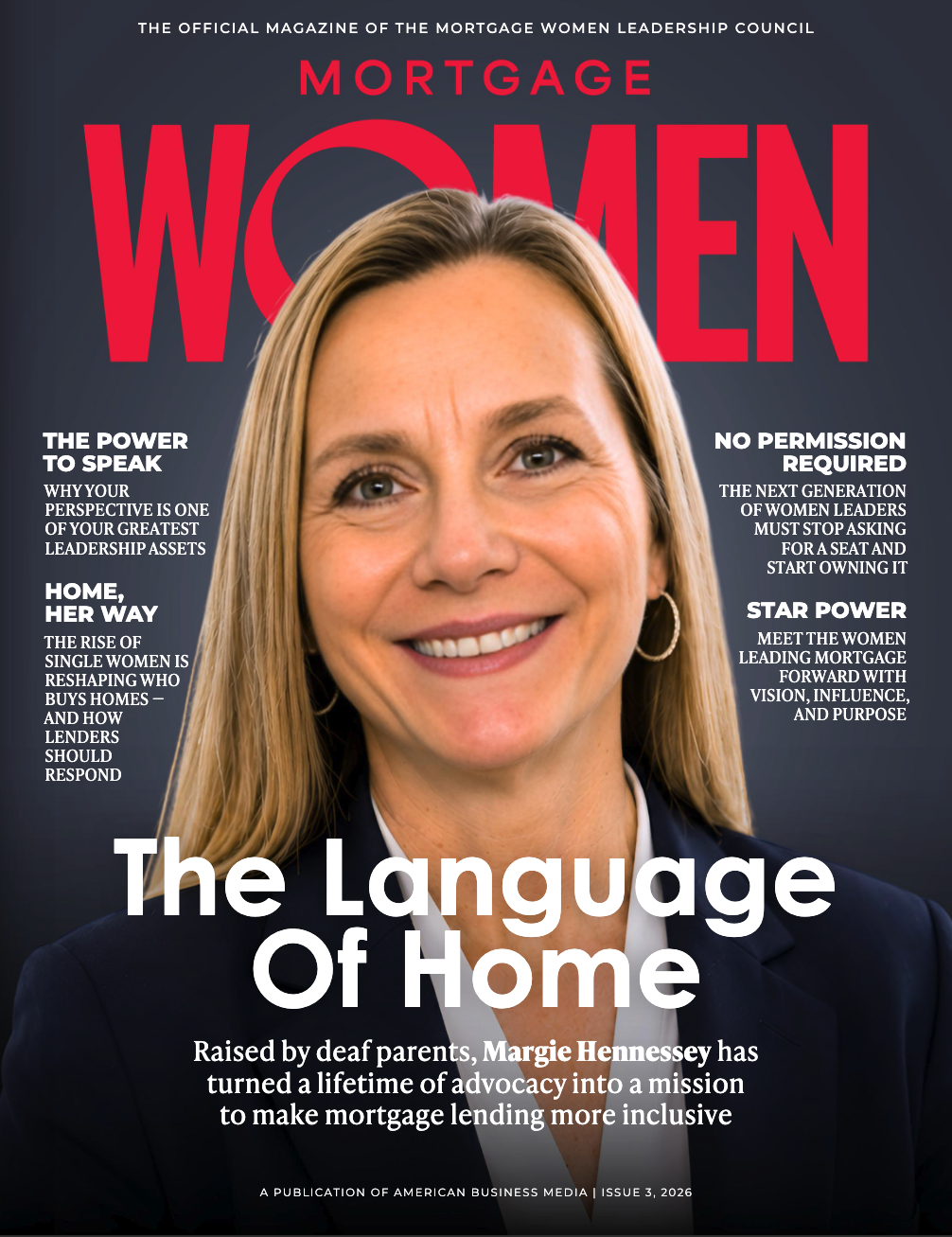
Margie Hennessey strives to make homeownership more accessible to the deaf community through direct communication via ASL
How women can speak up and stand out in meetings


.jpg)





_WEB.jpg)


.png)



.png)




.jpg)

.png)
.png)
.jpg)


.jpg)









.png)



Lorem ipsum dolor sit amet, consectetur adipiscing elit. Suspendisse varius enim in eros elementum tristique. Duis cursus, mi quis viverra ornare, eros dolor interdum nulla, ut commodo diam libero vitae erat. Aenean faucibus nibh et justo cursus id rutrum lorem imperdiet. Nunc ut sem vitae risus tristique posuere.
Lorem ipsum dolor sit amet, consectetur adipiscing elit. Suspendisse varius enim in eros elementum tristique. Duis cursus, mi quis viverra ornare, eros dolor interdum nulla, ut commodo diam libero vitae erat. Aenean faucibus nibh et justo cursus id rutrum lorem imperdiet. Nunc ut sem vitae risus tristique posuere.